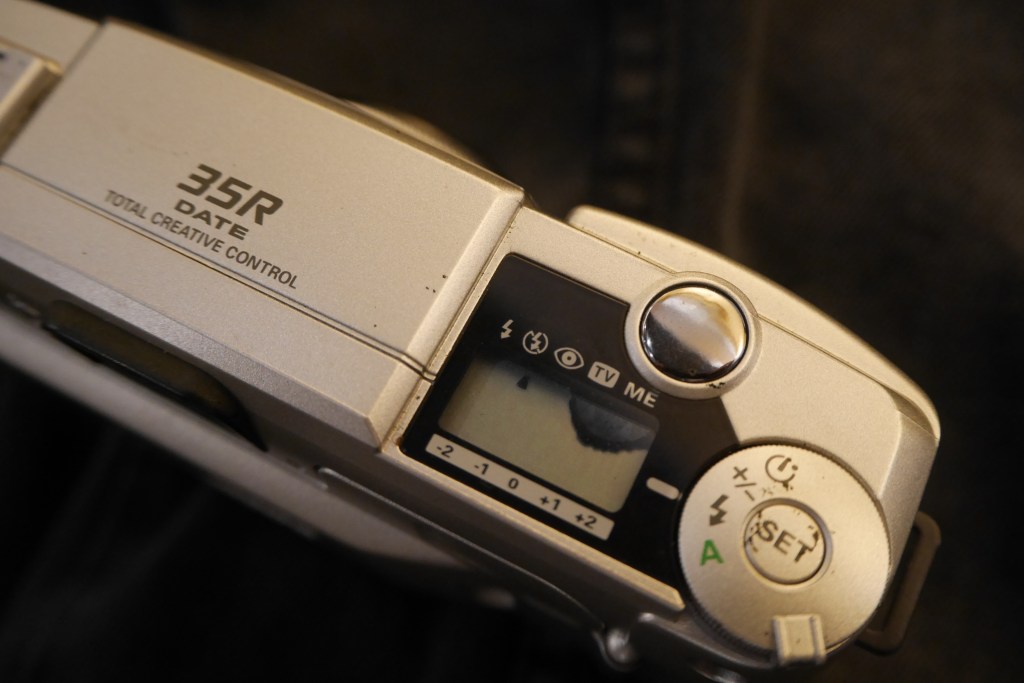
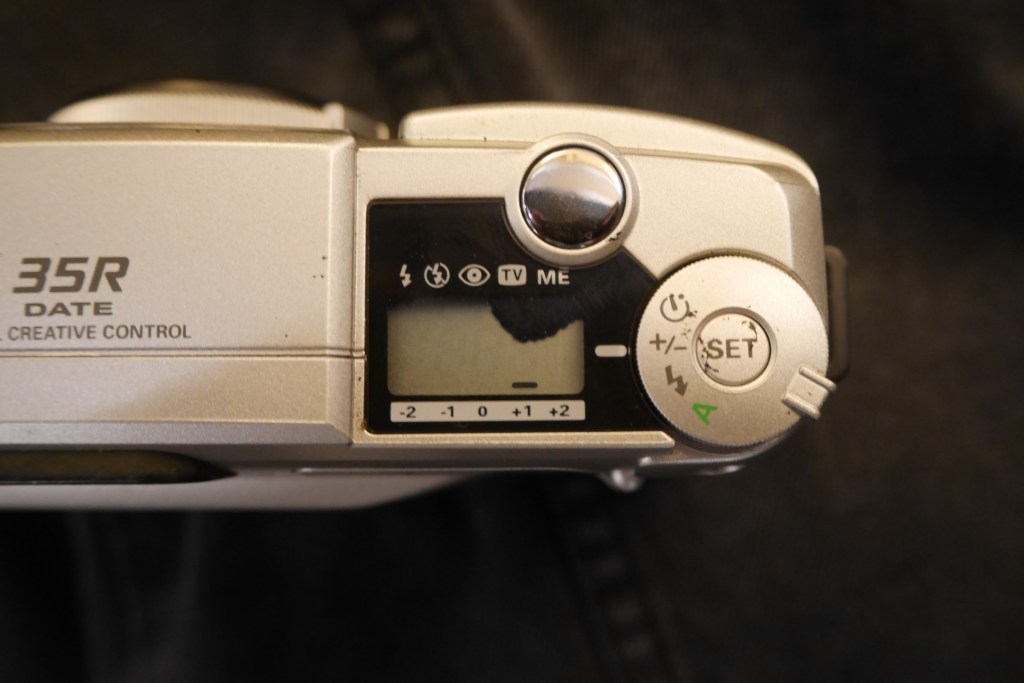

I love pocketable cameras – but aside from the somewhat expensive Contax TVS cameras, haven’t fallen in love with Point & Shoot film cameras of the late 90’s/early 2000’s. I’ve also loved the concept/ability to shoot multiple exposures hence owning both the Ricoh 500gx and the later and final Ricoh 500me (Multiple Exposure).
So why not just be happy with the 500gx or 500me? Well – if you know you know. There’s always the “if the camera could only do this one other thing”, in this case be a point & shoot when I want it to be – but a rangefinder when I have the patience for manual focusing. Also, I stupidly sold the 500gx – and even more stupidly left the 500me in the US at my parents so it would be there when I come to visit.
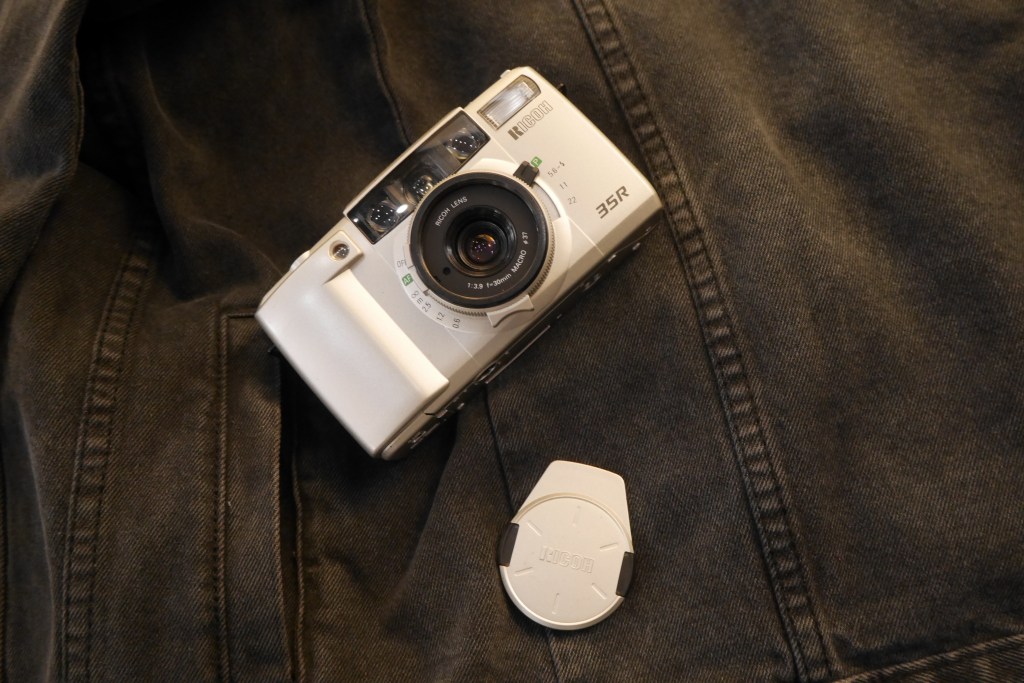
I had seen the Ricoh 35r/MF-1 camera around on some camera shops’ social media posts, and the idea of a P&S that has a manual focus and manual aperture override seemed cool – then I found out it also does Multiple Exposure! AND…wait for it…You can turn the flash off – completely off so no accidentally blasting some poor stranger in the street on a photo-walk. The Contax TVS can do all of this – except multiple exposure. Oh yeah, and speaking of the TVS, what about that great exposure compensation feature? The 35r does that too – sort of.
I found many articles online about the camera and had suggested it to a member of a film photography group on social media, but couldn’t find one for sale – they seem fairly cheap but also hard to come by. Then one day a guy posted one for sale in great condition, and for only $55 – so I went for it. I was excited to use the exposure compensation to reduce exposure and then take double exposure portraits, and being able to set a manual or “snap” focus distance and not worry about the autofocus missing was really exciting!
The camera arrived and I put in a roll of film. I usually shoot hand rolled Vision film (usually 250 daylight film, but occasionally the 200 or 500 Tungsten balanced film). I’d heard that P&S cameras would often break using this type of film so I opted for some Kodak ColorPlus 200 speed film instead. The weather had been cloudy, so having some extra saturation seemed like a good idea.
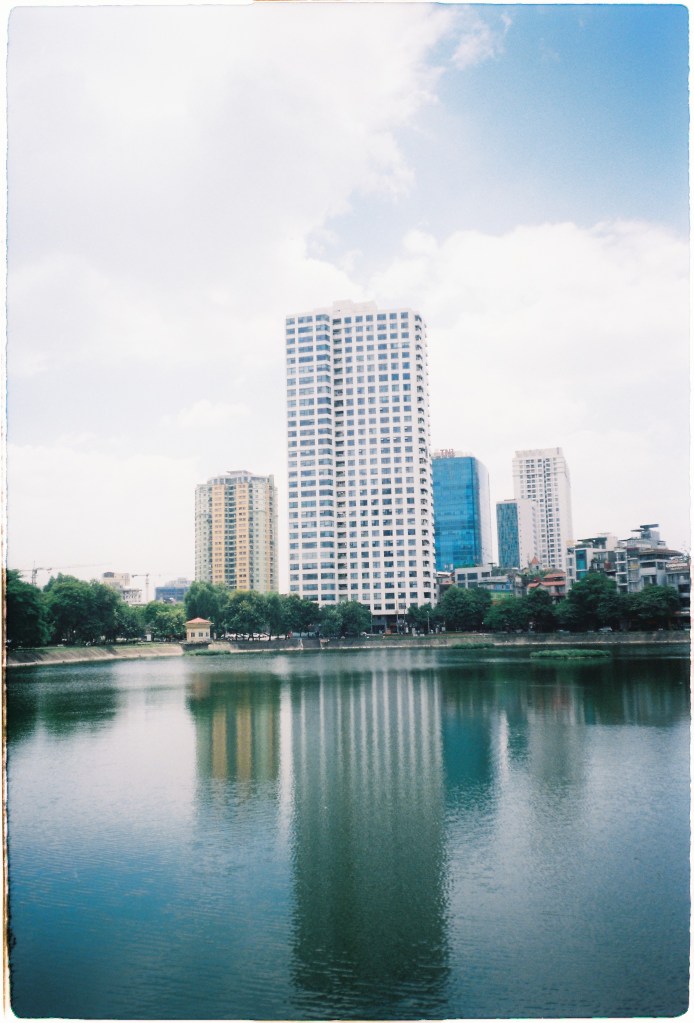
Here’s some unedited sample shots including a double exposure selfie…


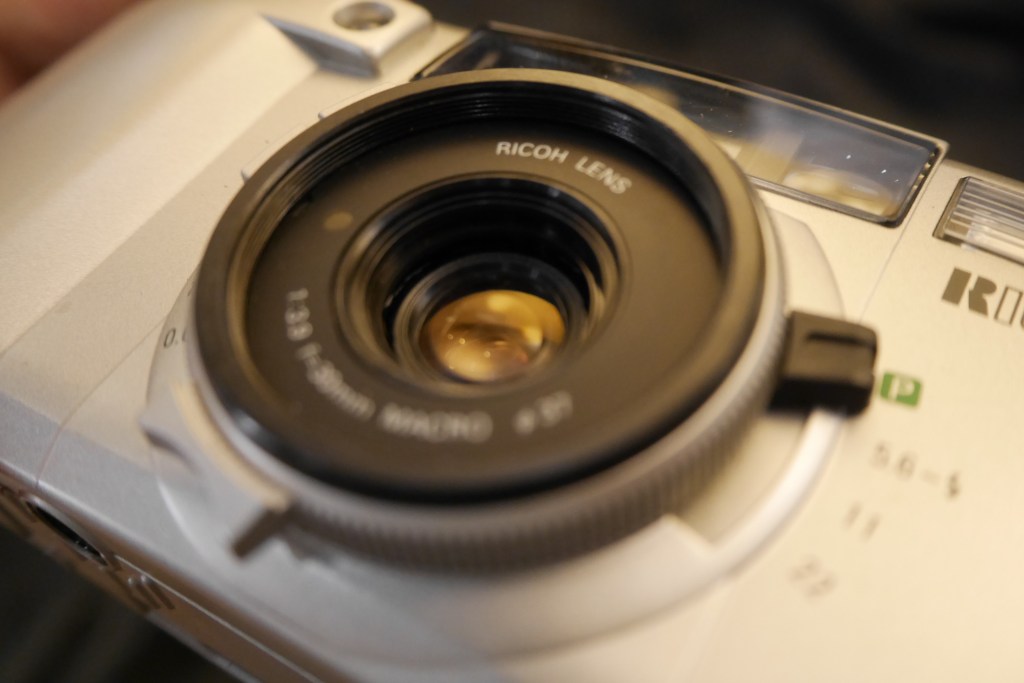
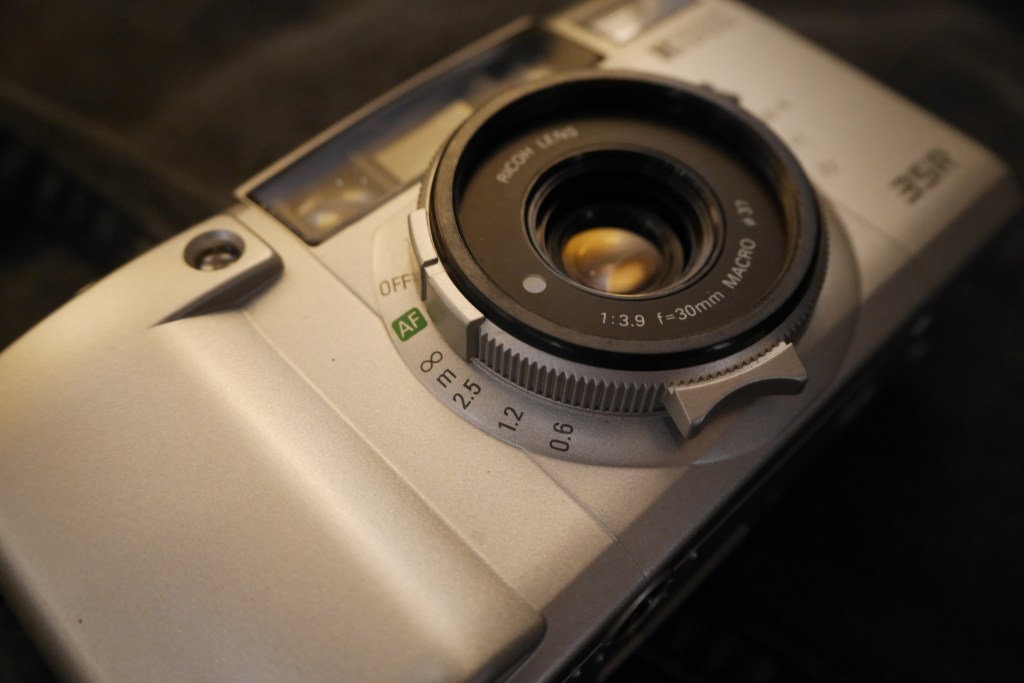
So, the good: it does take UNLIMITED multiple exposure photos. It does have manual focus, full program OR aperture priority with 3 choices (f5.6, 11, and 22). It does allow you to shut off the flash/leave it off, it’s really decent to hold and seems to have good autofocus, a nice wide 30mm lens, and proper exposure metering.
The bad: As Jörg Krüger states in his review of the camera, the myriad of excellent control features can’t all be used simultaneously due to a singular “mode setting” lever/wheel. The worst of which in my opinion is the flash-off and multiple exposure and/or exposure compensation and multiple exposure. My guess is that the camera relies on the film latitude to allow the multiple exposures to work/look good, and they assumed you’d want flash on while doing this. Why, I will never know. Also, as noted in some reviews, the automatic film winding is loud – and the autofocus makes a loud double click sound (which doesn’t matter if you focus manually). Lastly, and I missed some great shots because of this – the viewfinder offers no focus indicator other than a green light off to the side of the window – which flashes if the autofocus isn’t finding contrast or if you’re in manual mode – and goes solid green if the autofocus is both in use and focused. I forgot this and took 5 street shots with the camera focused at 0.6 meters (2 feet).
So is any of it a deal breaker? Not really for a cheap camera, but a bit disappointing – it’s like getting a sports car that has a speed regulator installed. It’s still cool, and is likely a safer bet (especially with the high cost of shooting film), but doesn’t make for the same experience. One thing I can’t seem to confirm, is that SOME of the features do work in a sort of memorized unison. Example, if you turn the setting wheel to FLASH-OFF, then to the exposure compensation settings, the camera remembers you want flash off somehow. but it can’t do the same thing with multiple exposure – and you can’t do multiple exposure with Autofocus turned on. Why? Again, no idea.
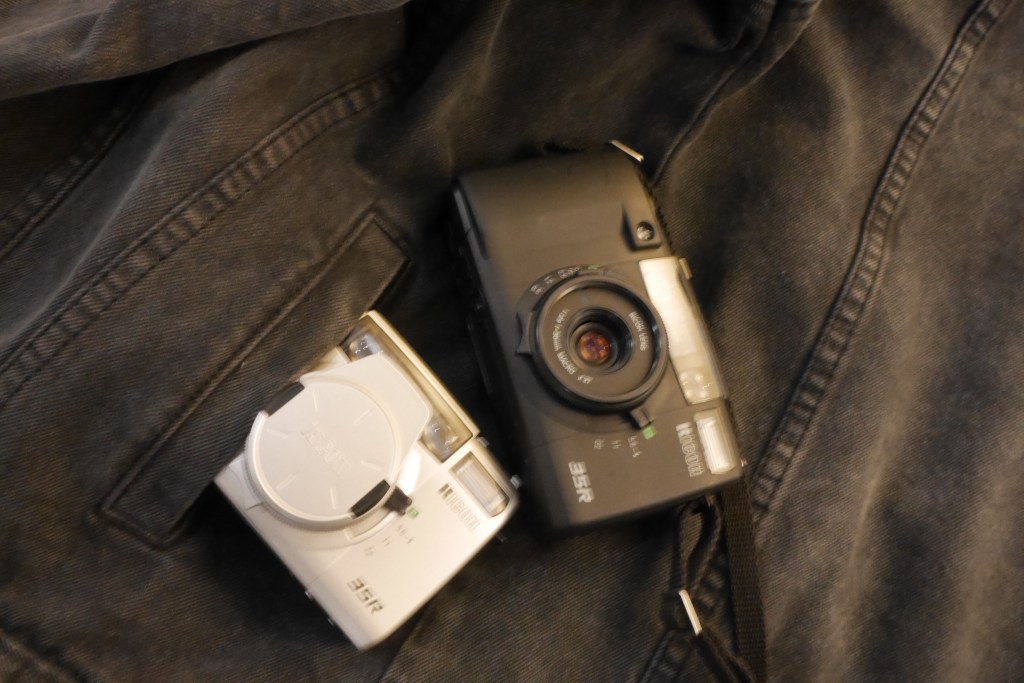
Is the Ricoh 35r a great camera? Absolutely! But using the manual or creative controls requires attention, slowing down to really be present in the process – which also sort of defeats the point of having some automation. I shot a 2nd roll of Fomopan 100 with the 35R – a silver version that I got with the black one.
I’d really like to experiment further with the 35r (also sold in a slightly different version called the MF-1). Shutting off the flash and shooting street photos at a fixed distance are features that make this camera worthwhile if that’s your thing – and it is mine! Also, trying more multiple exposures and just dealing with the flash could be fun…
Thank you for reading and happy snapping,
Daniel
 VijnBord
Leave a comment