-
The most advanced Rollei 35 camera…Came out in the mid 1970s!
Amidst the likely deserved hype of a new version of Rollei’s incredible Rollei 35 camera – the Rollei 35 af, a modernized autofocus version with many new features – I had to do a post to mention the Voigtlander VF101. Made by Rollei in Singapore, this camera is nearly as small as the original Rollei 35, has an incredible lens, and has a similar removable bottom for changing film. Still, unlike the original Rollei 35, it has some significant upgrades. After shooting with the Rollei 35 (also called 35T for Tessar), the 35s (Sonnar lens), and the 35b with a selenium cell and Triotar lens, I can say I really love the shooting experience of these cameras – but hated missed focus. I’m also a manual focus kinda photographer even when shooting digital – I often leave my Fuji on manual focus.
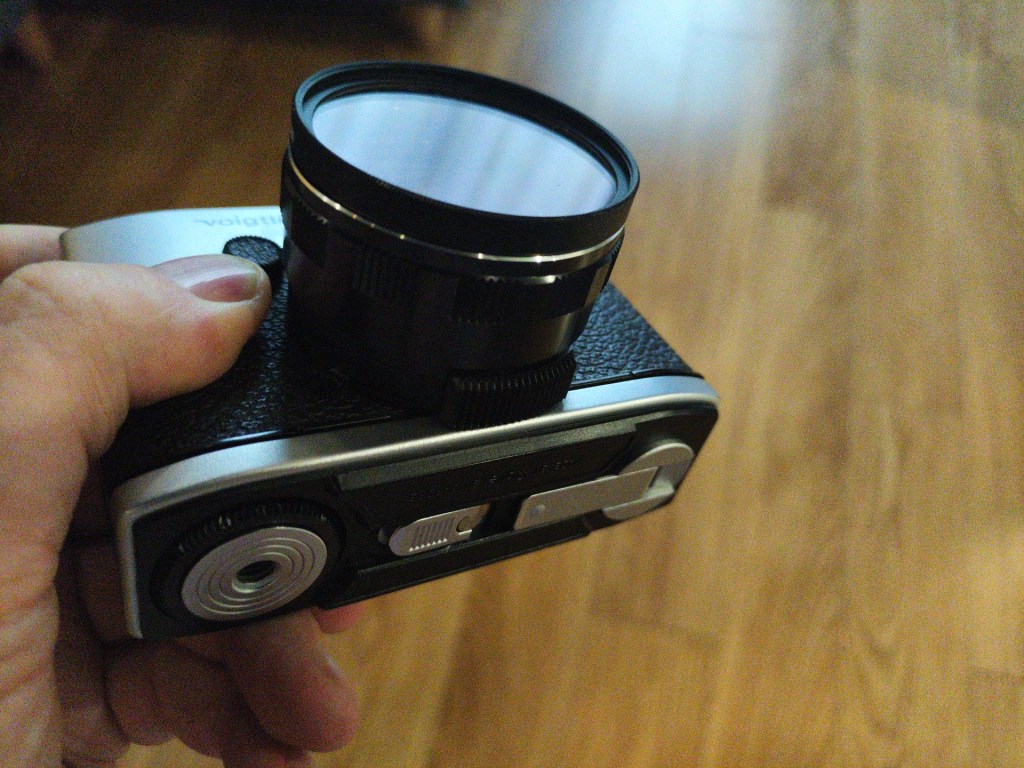


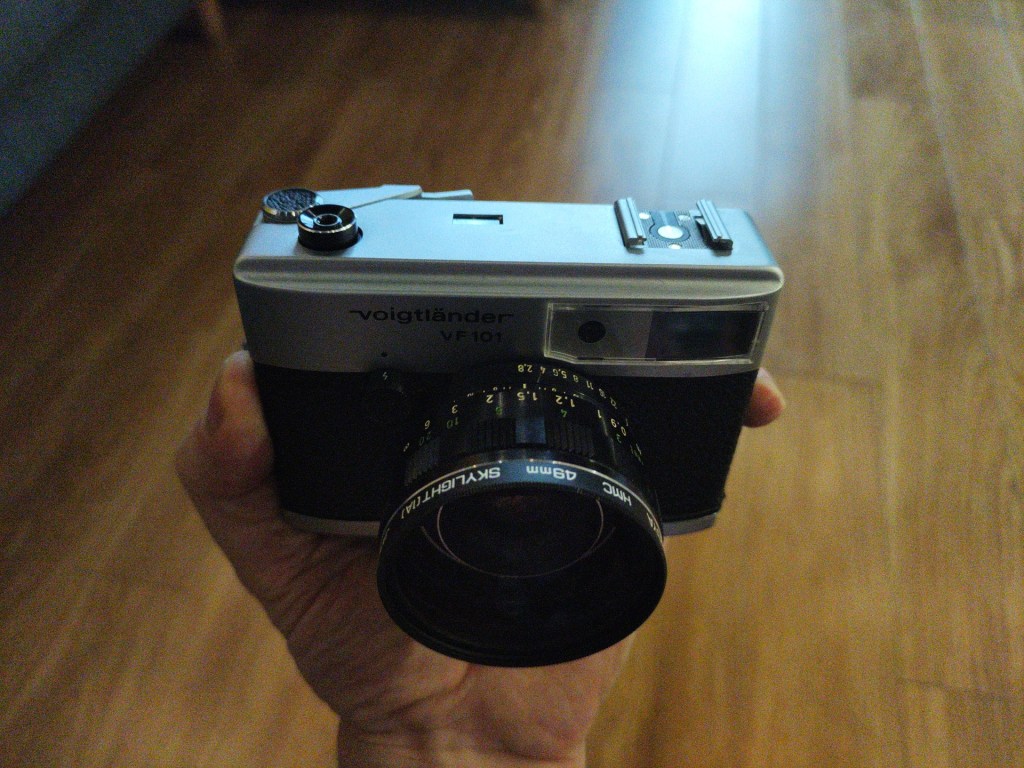


The backstory of this amazing and solidly built shooter is more complicated than a Game of Thrones plot line – a sibling of the little-known Zeiss s312, built by Rollei and uses many of the same parts, and badge as Voigtlander. You can learn more about the history in Vicuna’s post on Lomography.com. What I want to share is how slept on this tiny little brick of engineering has been since it hit the market about 50 years ago (damn I’m old!). First, I love that it has Aperture Priority automatic as one can simply adjust the aperture to get the desired shutter speed or adjust to get the desired aperture – and either way you get the proper exposure if the shot is within the range of shutter speeds and aperture capabilities of the camera.
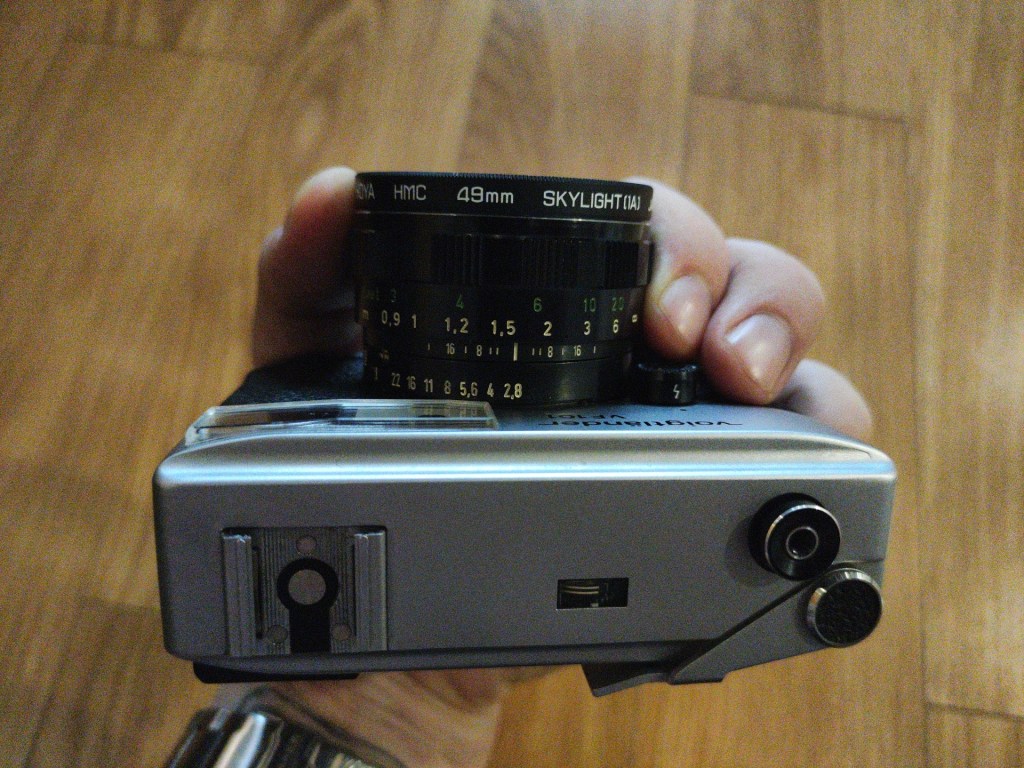
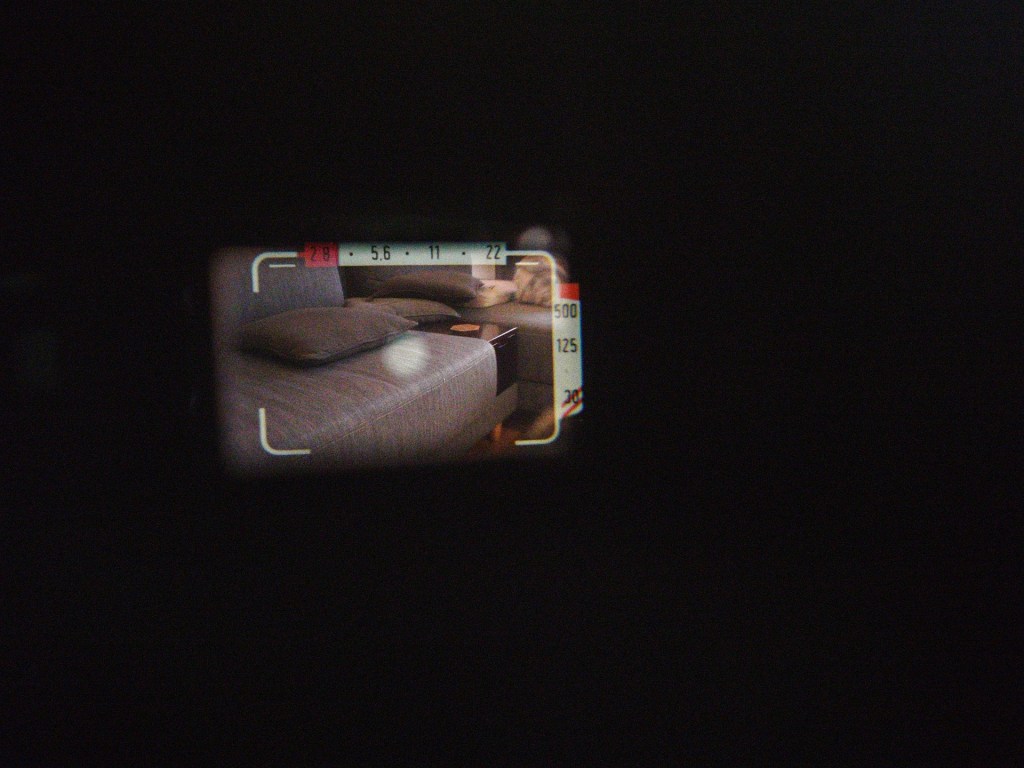
The camera’s lens protrudes about 1cm – not much, but still more than the Rollei 35 lens when tucked away. This makes it more of a jacket pocket camera than truly pocketable (it’s also thicker in the body than a Rollei35 by maybe 5mm). Taking a cue from it’s sibling – or perhaps estranged cousin, The VF101 has a slide-out focus ring that doubles as a sun shade – also revealing the aperture numbers and a depth of field scale. Also beating the Rollei in my opinion, the Viewfinder has a rangefinder patch for precision focusing, Shutter speed, and Aperture setting! The only other camera I own (filmwise) that has all 3 details in the viewfinder is the Olympus 35rc.
As for shooting with the camera, it’s a blast! The size is quite small and inconspicuous for street photography, the boxy shape almost looking like a children’s toy camera at a glance. But don’t be fooled, in hand this feels like a precision machine from the golden age of Rangefinder cameras. There’s a tiny knob on the front of the camera that can be set to Flash or Automatic (aperture priority as mentioned). When set to Flash – the metering seems to shut off – I treat this as an off switch to save batteries. There’s a shutter counter on top – strangely in a small square window that appears to be more of a ribbon with numbers on it than a wheel. Also – similar to the film winding indicator on the Canon QL 19/17 it has a small window on the back with a red line that vibrates back and forth as the film is wound – but is still if the film isn’t winding.
An interesting thing is that below the lens is a textured lever, it would seem like it’s there to adjust the focus, but actually adjusts the aperture while gripping and turning the extended sunshade (textured as well) adjusts focus. While adjusting the aperture, the indicator in the viewfinder also moves, and the chosen shutter speed will also be indicated by a moving needle (indicators for shutter are slow area/overexposure which are red stripes at top and bottom of the scale, 30, 125, and 500). The Rangefinder patch is actually round like on the Rollei xf35. I’ve often considered the Rollei xf35, but the automatic exposure is a turn-off.
So, how does the lens render??? Fantastic. The 40mm Color-Skopar produces excellent results even with backlit scenes one can still see the definition. As seen below as we examine the background where the street scene meets the sky.
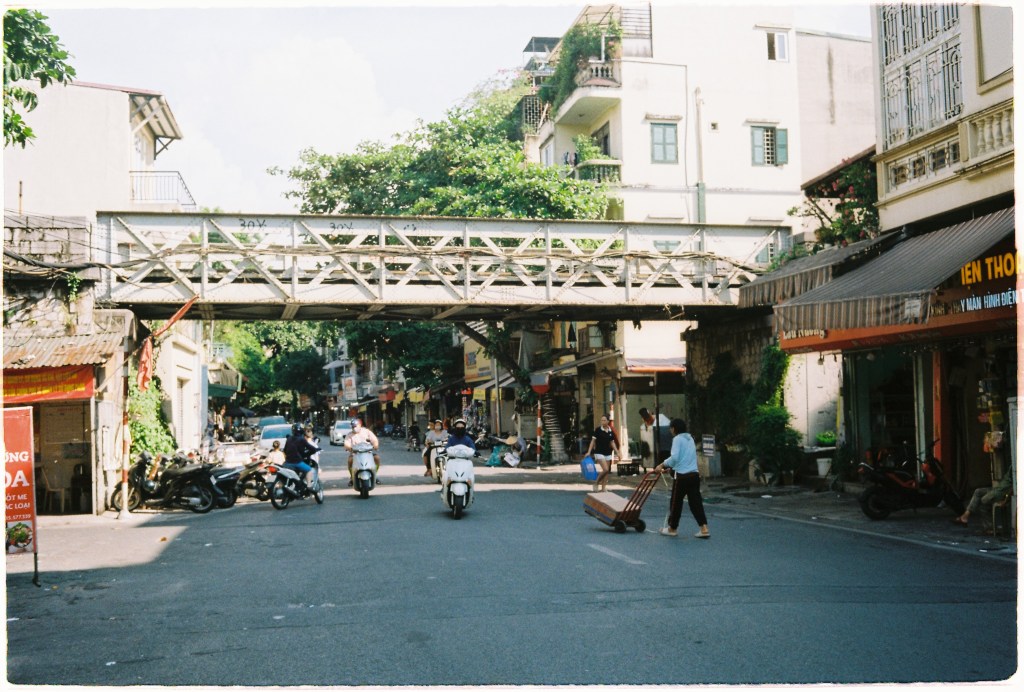
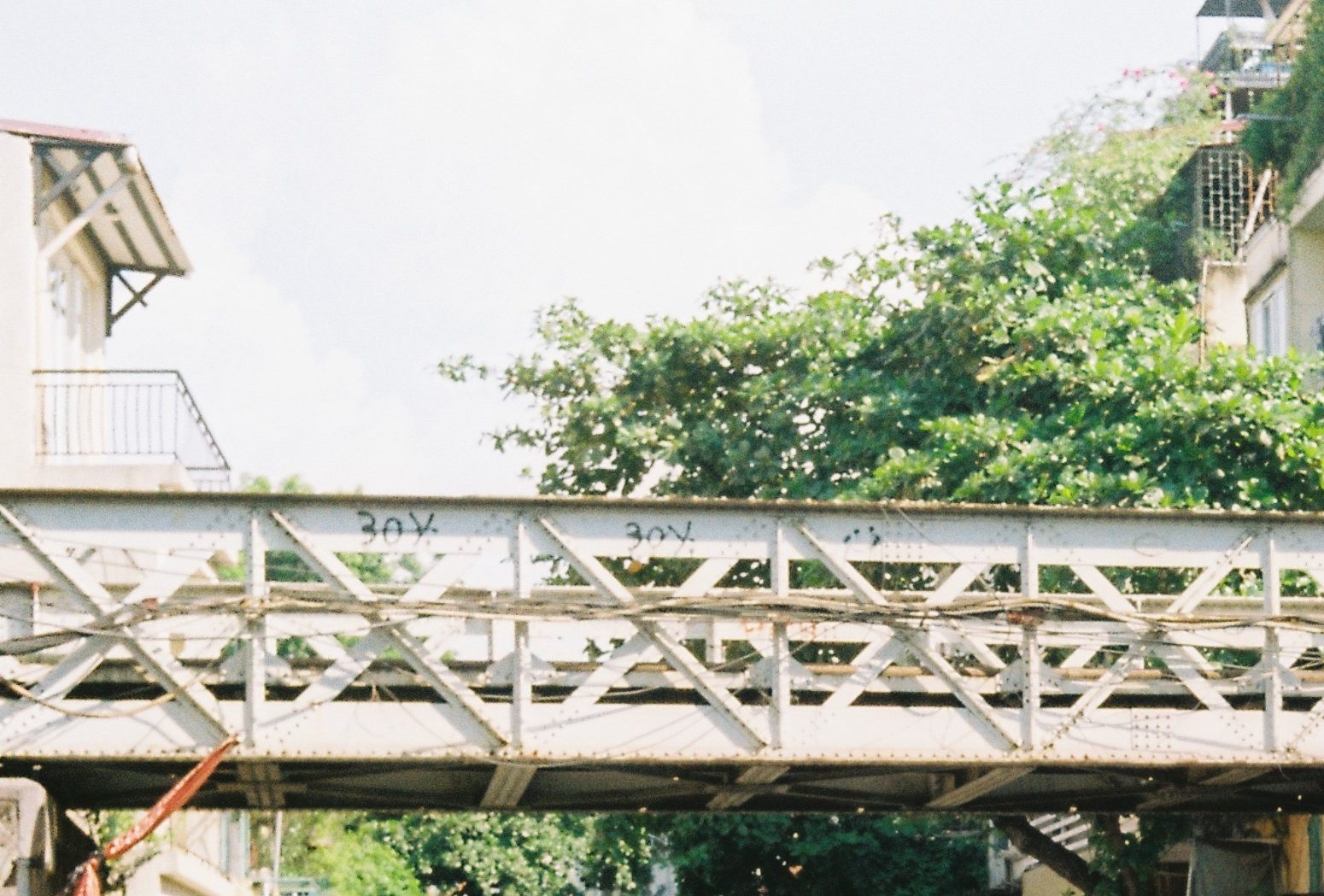
These are original scans, shot with Fuji 200 color negative film – not edited at all. We can see that the lens still renders individual leaves from a great distance (though out of focus – bad photographer, bad!). Another shot from this same walk demonstrates the contrast and color rendering of the Color-Skopar…

A close in crop – and we see that once again our over-eager street snapper missed focus (I was zone focusing at f5.6 and 3 meters – not the camera’s fault).
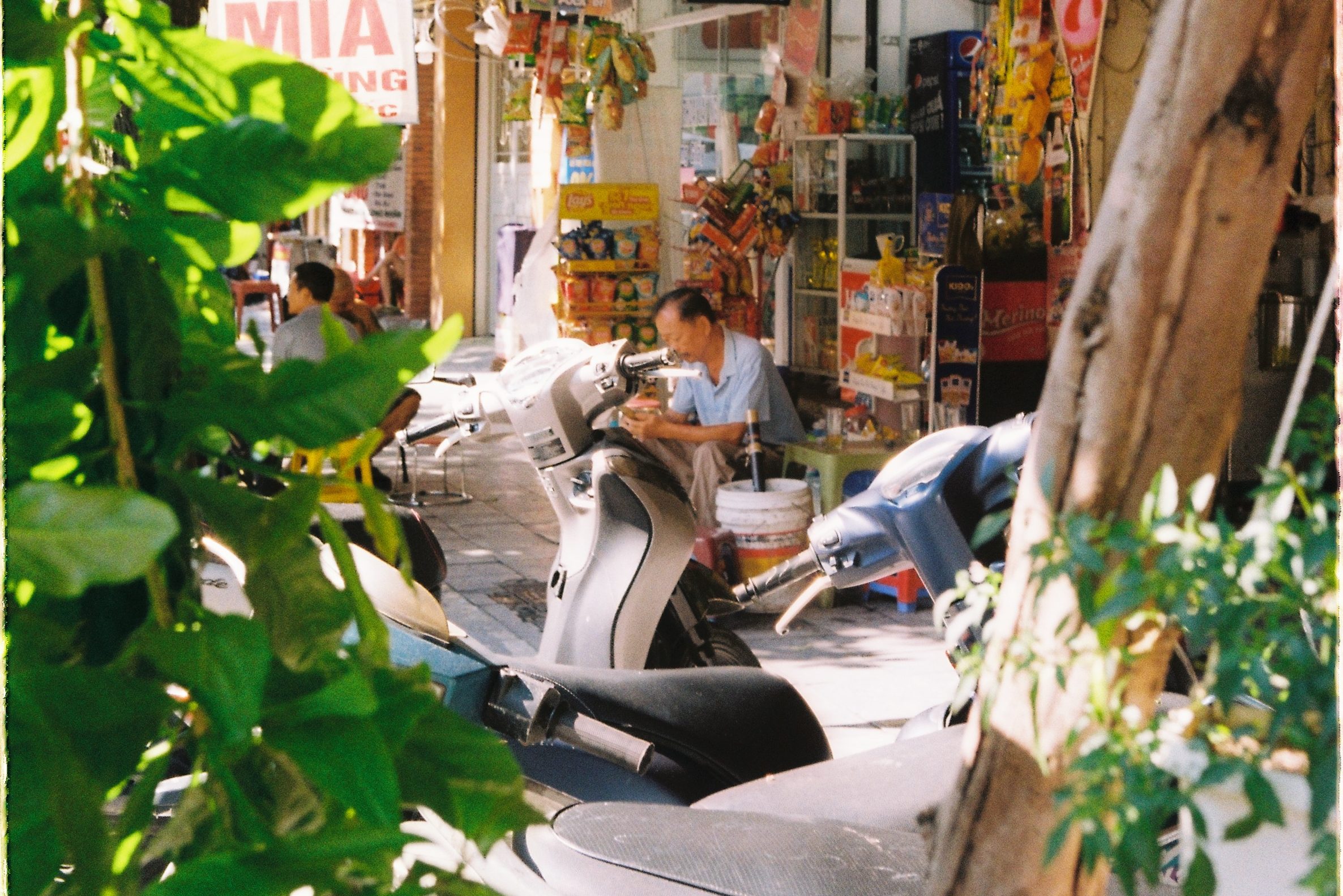
Ok, ok gimme one more chance – again, a lot of zone focusing on this walk, should have stopped down to f8-f16 as it was quite sunny.
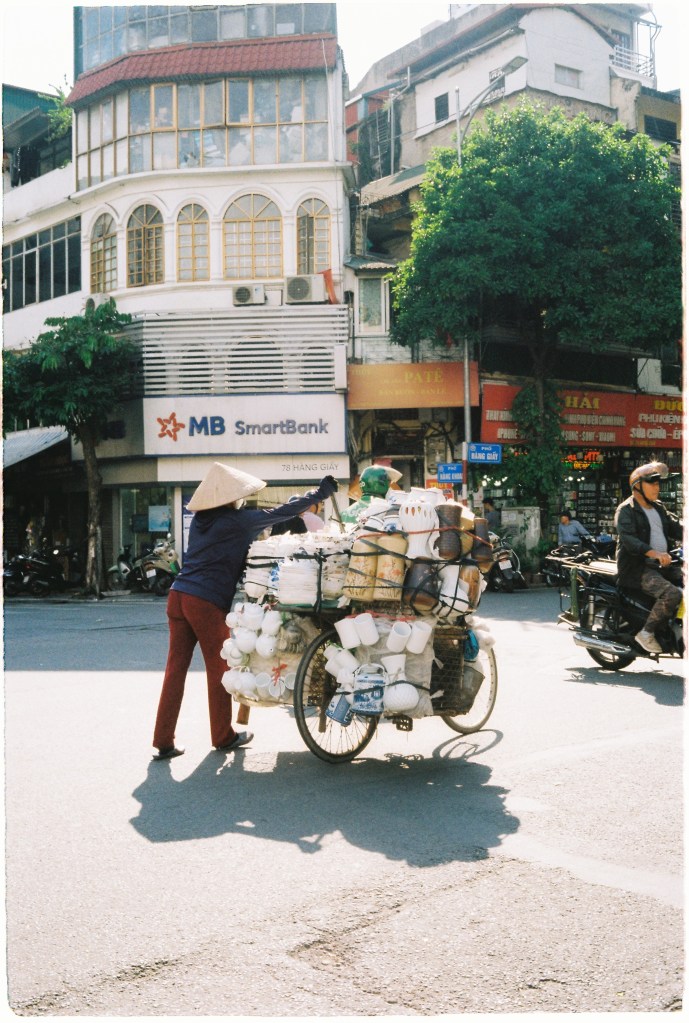
Ok, so how about the details on that pottery…

Not too shabby – and these aren’t tiff files or high-resolution scans, just the budget option from my local lab. I’m quite happy with this little machine. I’ve added a skylight 49mm filter, after shooting these shots, and my only complaint about this camera is that adding the filter makes the lens cap only retract part-way – but this has the benefit of leaving the aperture numbers in view. Trade-offs in life I guess.
Other features include a hot shoe, threaded shutter-release cable insert, wrist/neck strap holes on both sides and a right-side tripod socket. While the film-winding lever seems just like the one on the Rollei 35 cameras, it is on the right side when holding the camera (just like the xf35). Some people might like this, whereas die-hard Rollei 35 shooters may find it unacceptable.
While it lacks some advanced features like autofocus and exposure compensation, this is a great camera if you can find one – I got mine for about $250. Rollei always made exceptional quality cameras, mine works like new despite being 50 years old.
One response to “The most advanced Rollei 35 camera…Came out in the mid 1970s!”
-
Forgot to mention it lacks a self-timer and iso tops out at 400.
LikeLike
-
-
Photography Challenges: Orange you glad we did this?
My friend Nimit (Instagram: @nimitclix) returned to Ha Noi and we agreed to go for a photo-walk. He had recently seen a photography challenge on social media suggesting the following criteria:
– 1 camera
– 1 lens, and I took it a step further by using a fixed aperture lens…
– choose a color and only take shots that have an object or texture with that color for all shots.
– I chose Orange.I had recently come upon a super cheap deal for the Olympus 15mm F8 body-cap lens, a tiny lens that is indeed about the size of a body cap and shoots the 35mm equivalent of 30mm focal length. So quite wide! I tossed onto my Lumix GF1 body – another budget item in my cheapskate amateur arsenal.
We met up on the insanely busy Doi Can street in the Ba Dinh district. This street is lined with shops and never ending hustle and bustle – motorcycles and honking and shouting and music and construction. Back to the setup of camera and lens, I hadn’t used either yet other than some test shots around the house. Why the GF1? It has a bigger grip/body than my Olympus EPL7, has an old CCD sensor which may give a better film-like look. For reference – check out these shots by another great photographer in Ha Noi – Linh (@vumanhlinh.neu) who recently posted some amazing shots taken with this camera. Good enough for a local legend, good enough for me!
So, how did a fixed 30mm f8 with no real focusing ability (it ranges from about 1ft to infinity by turning a lever 45 degrees)? Fun – and with zone focusing at about 3ft to infinity, I didn’t have to wait for autofocus. Nimit pointed out halfway through the walk that the orange was oversaturated and appeared red. I had yet to calibrate the settings to my liking or check this unfortunately. Here’s the sooc jpegs…
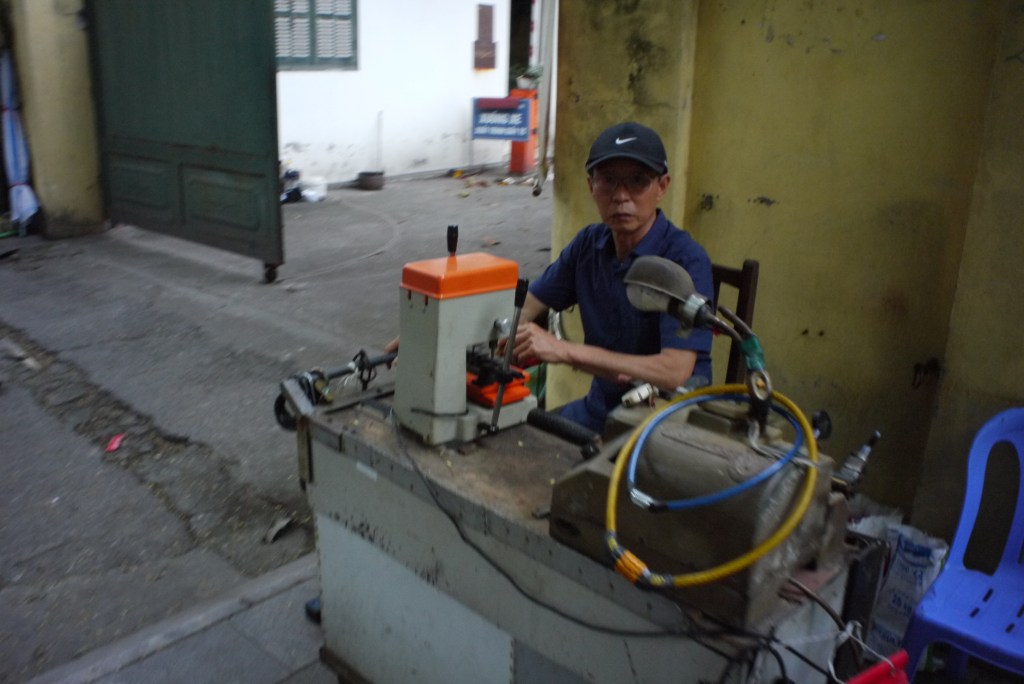
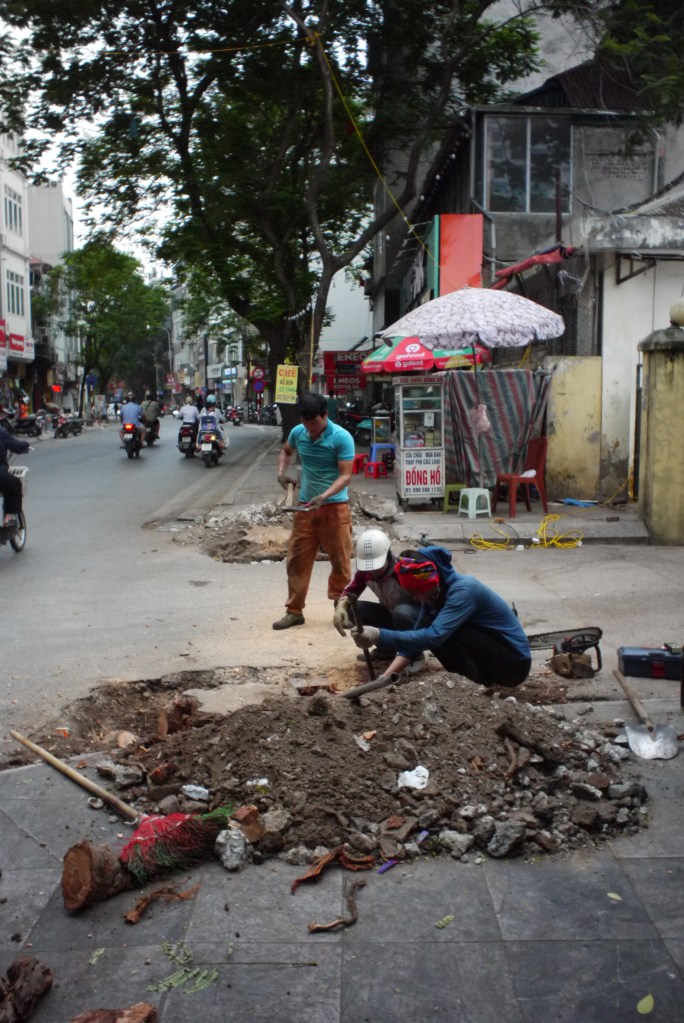
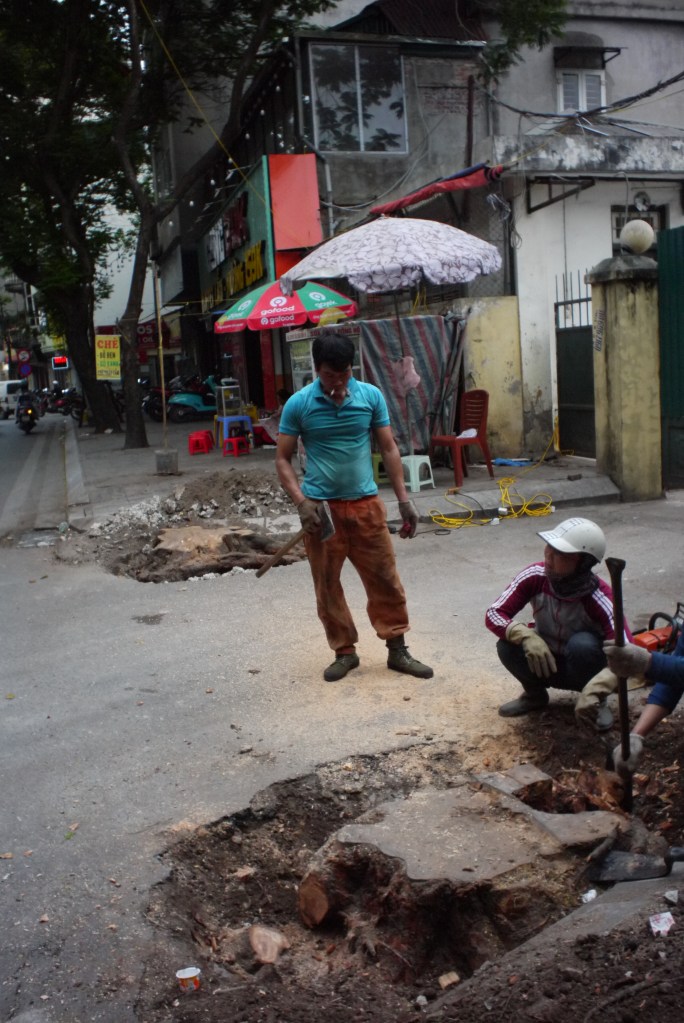
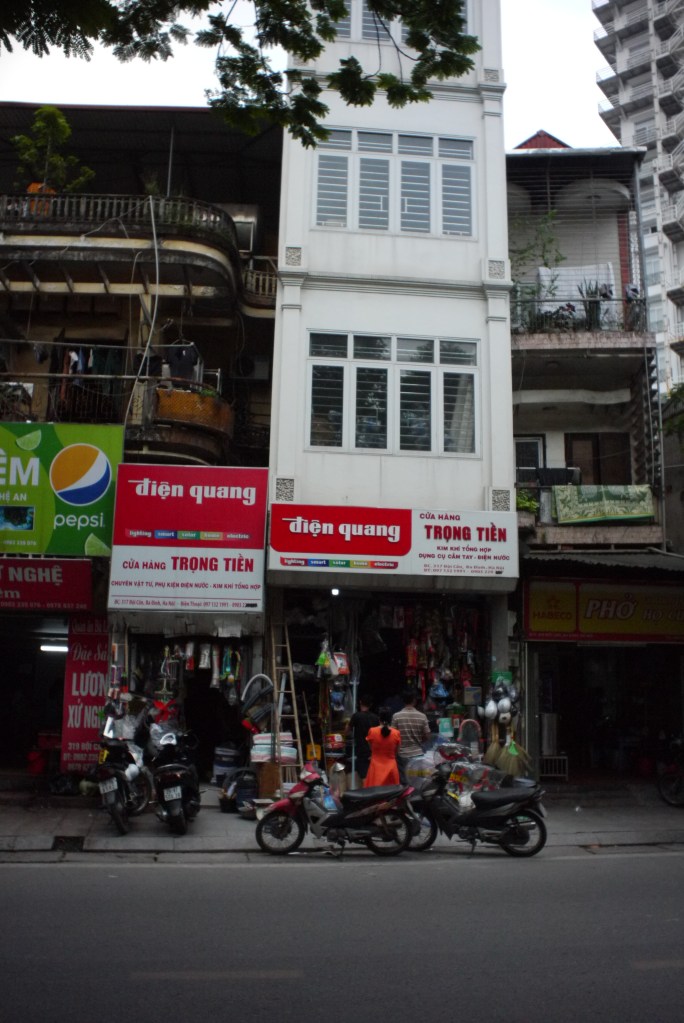
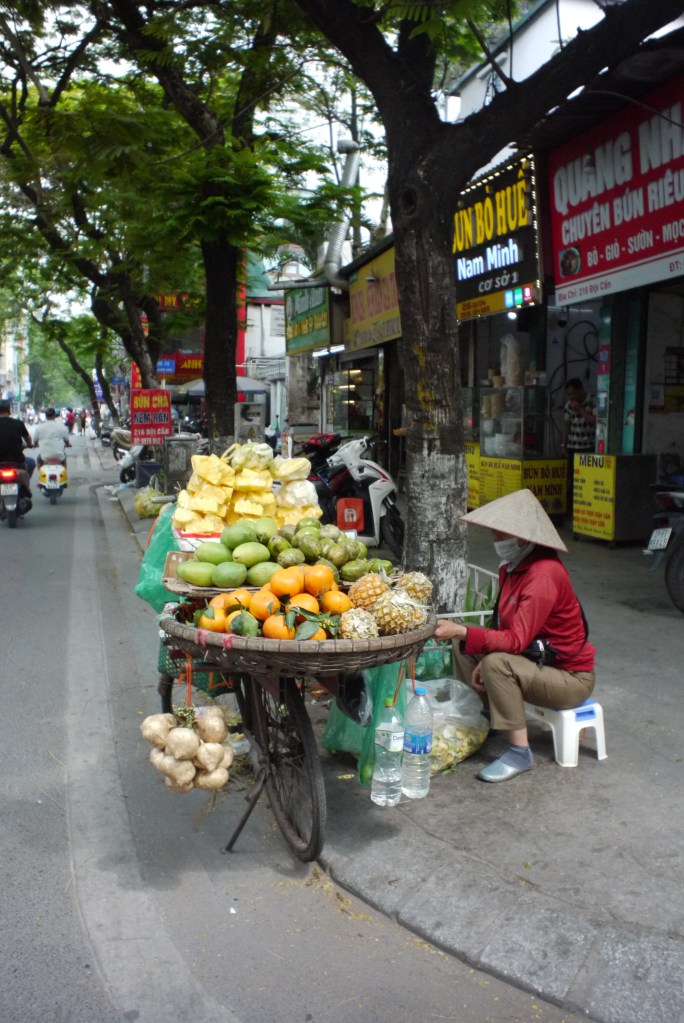

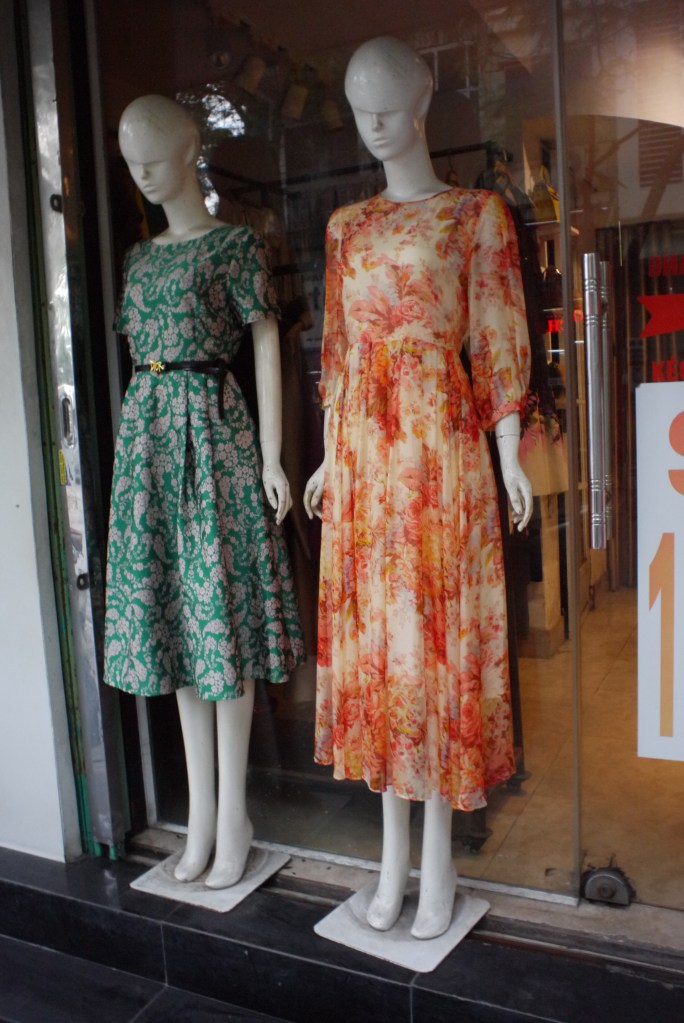

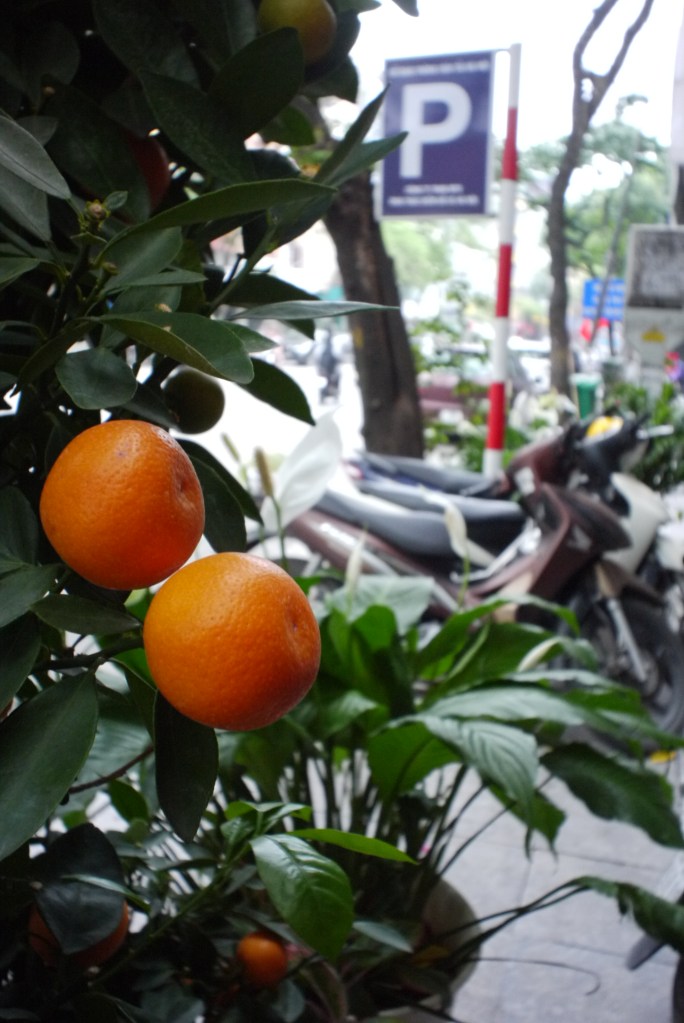
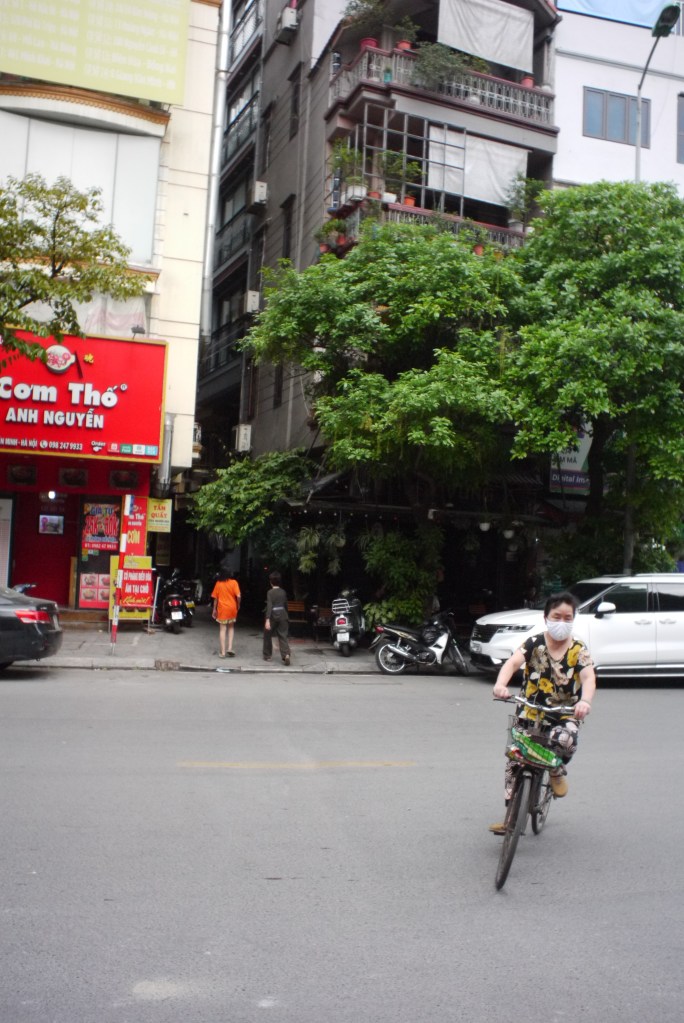
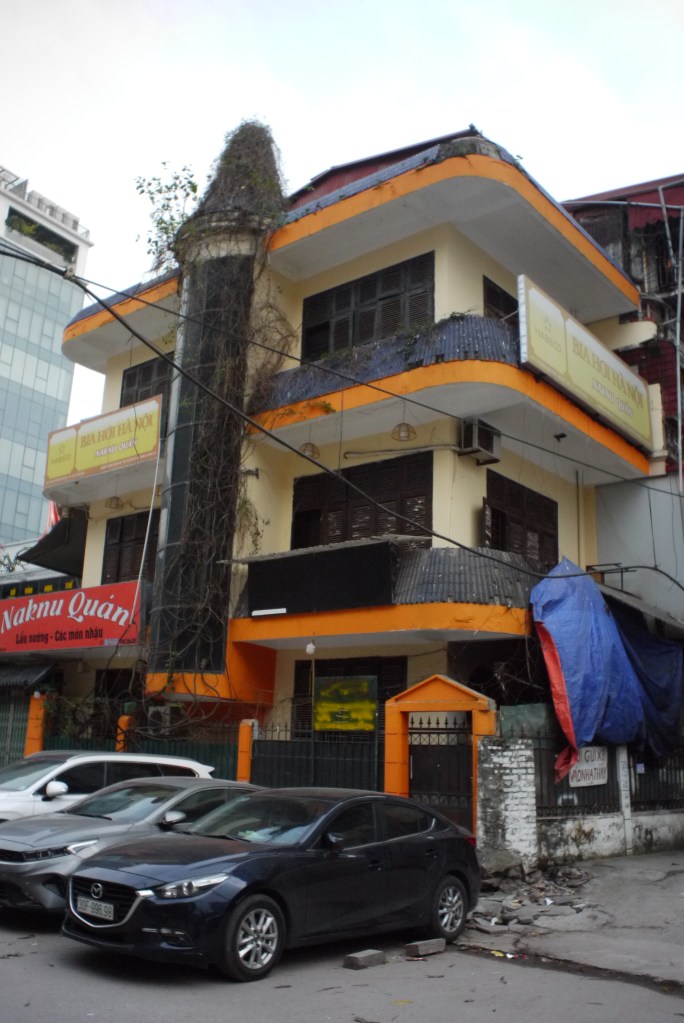
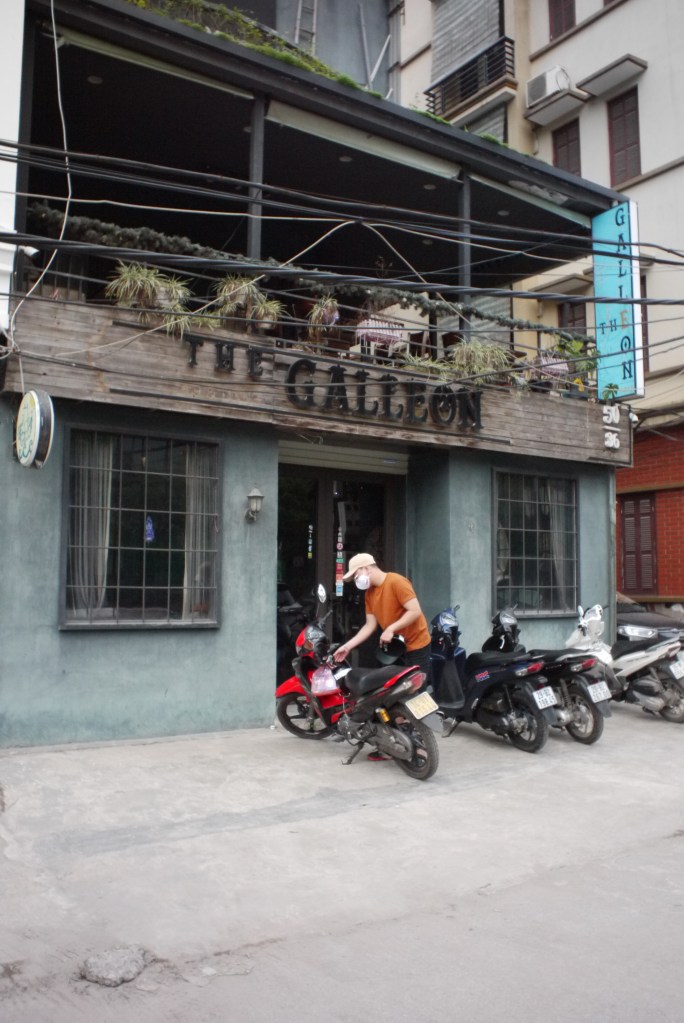
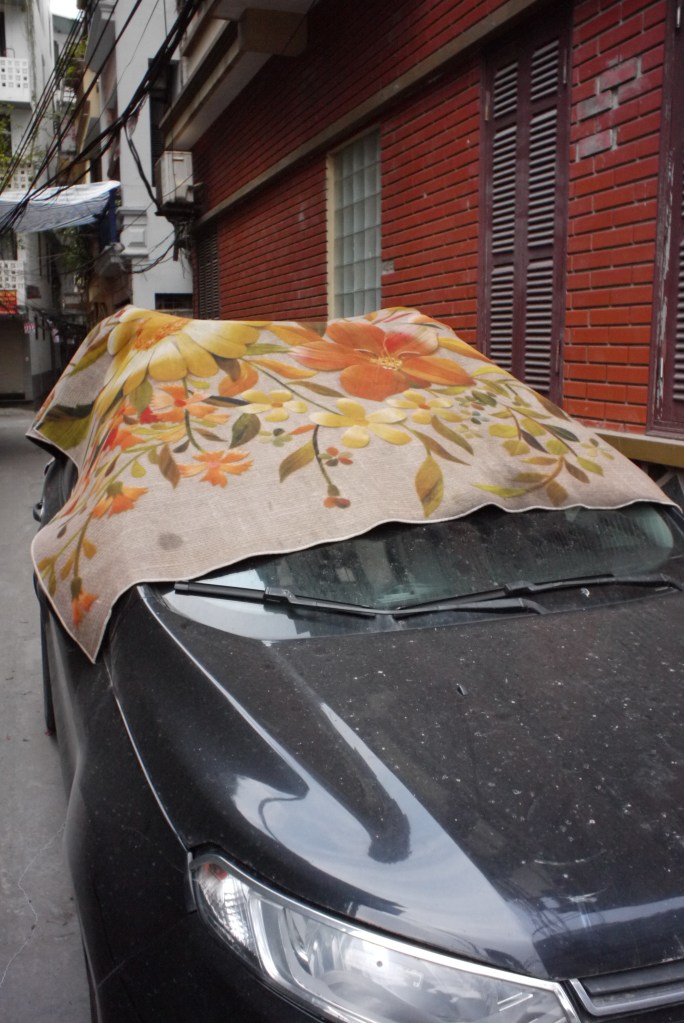
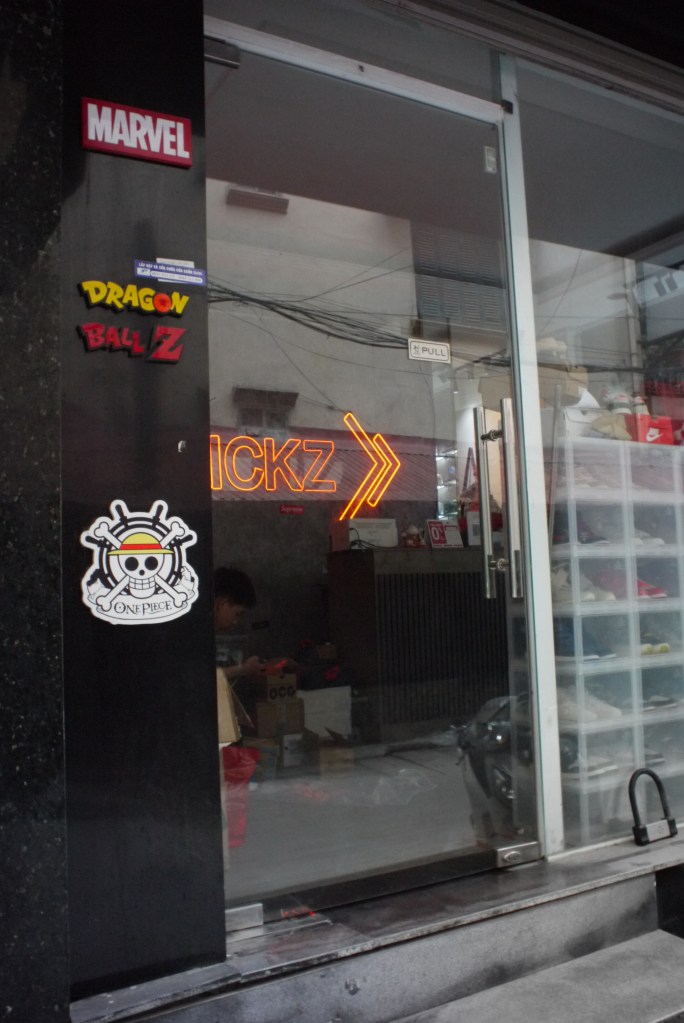


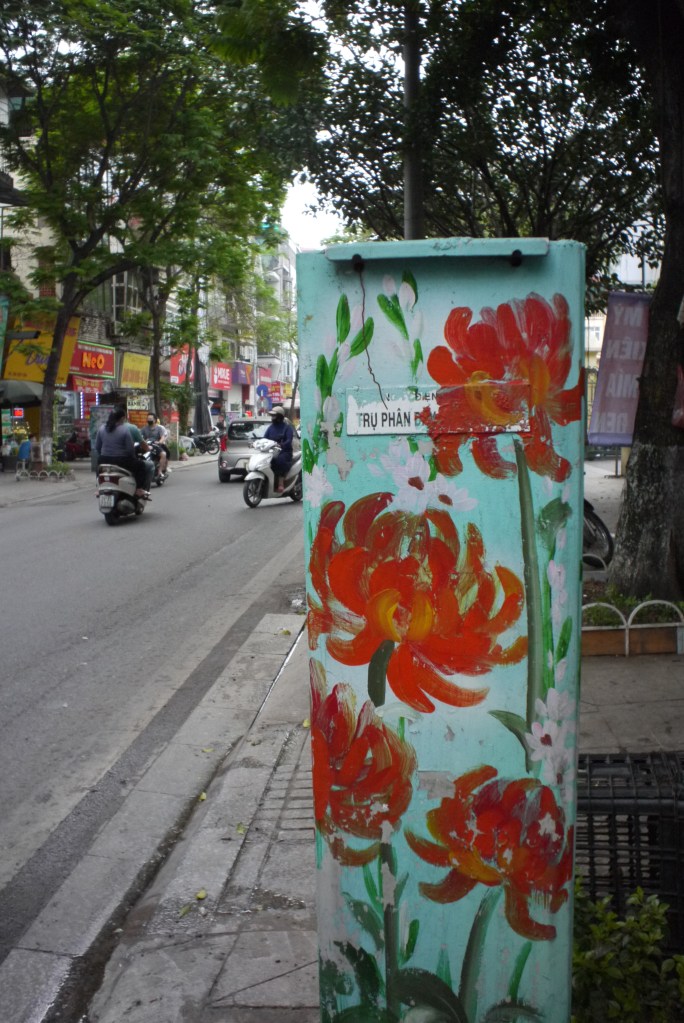
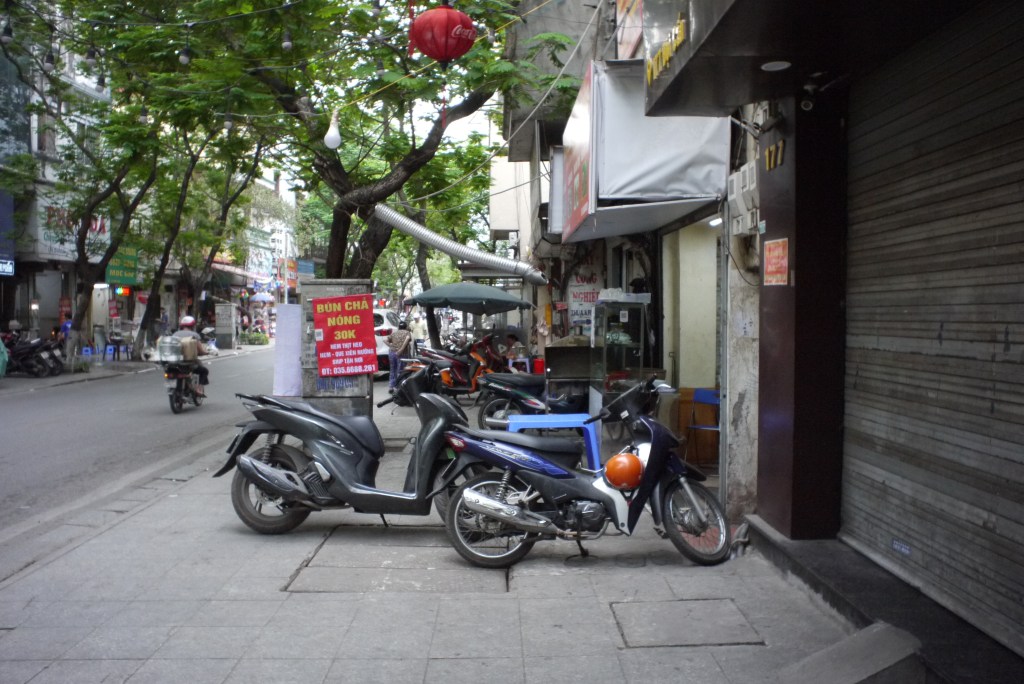

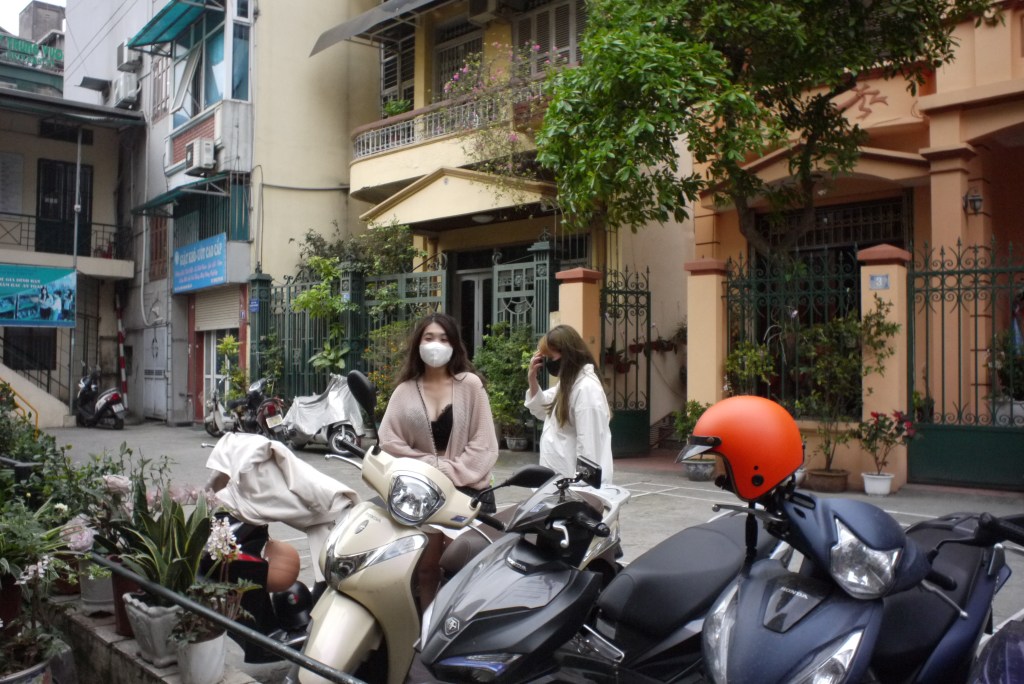
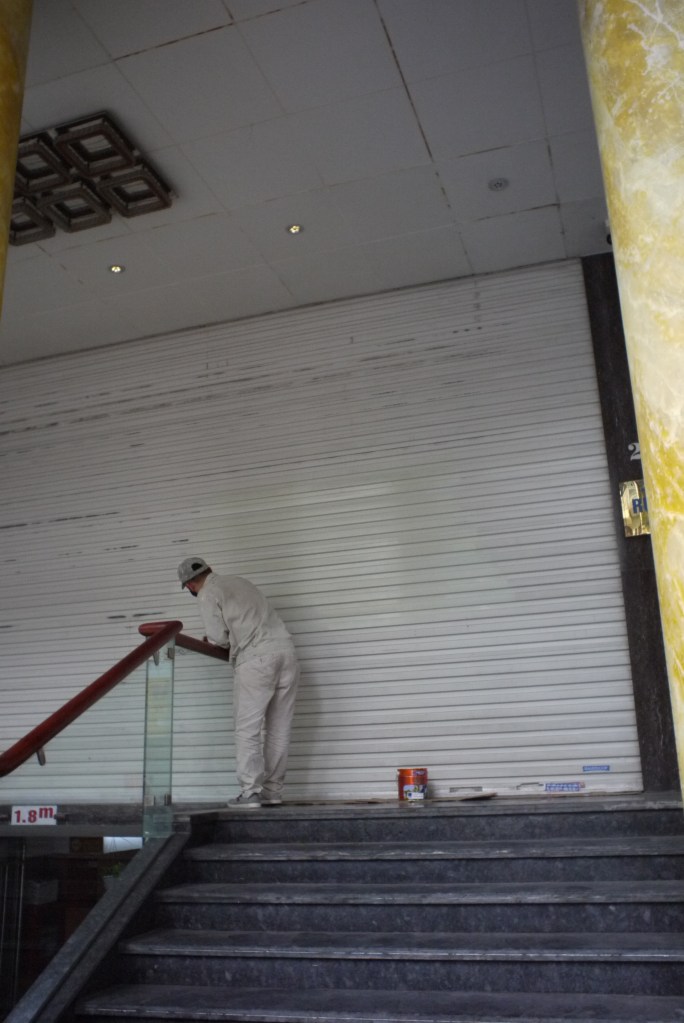


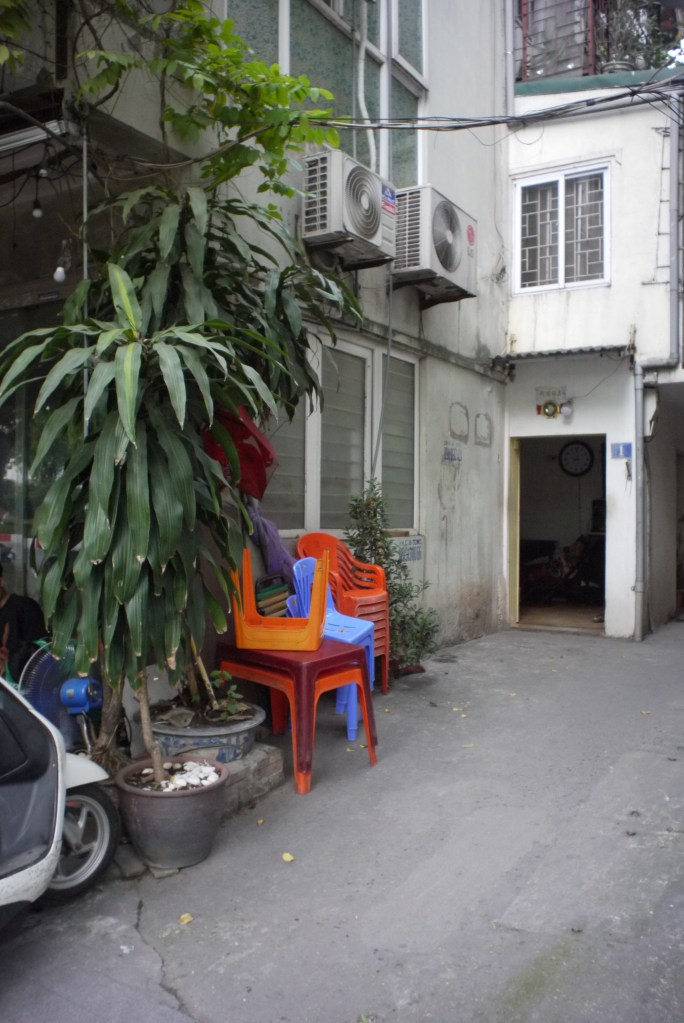
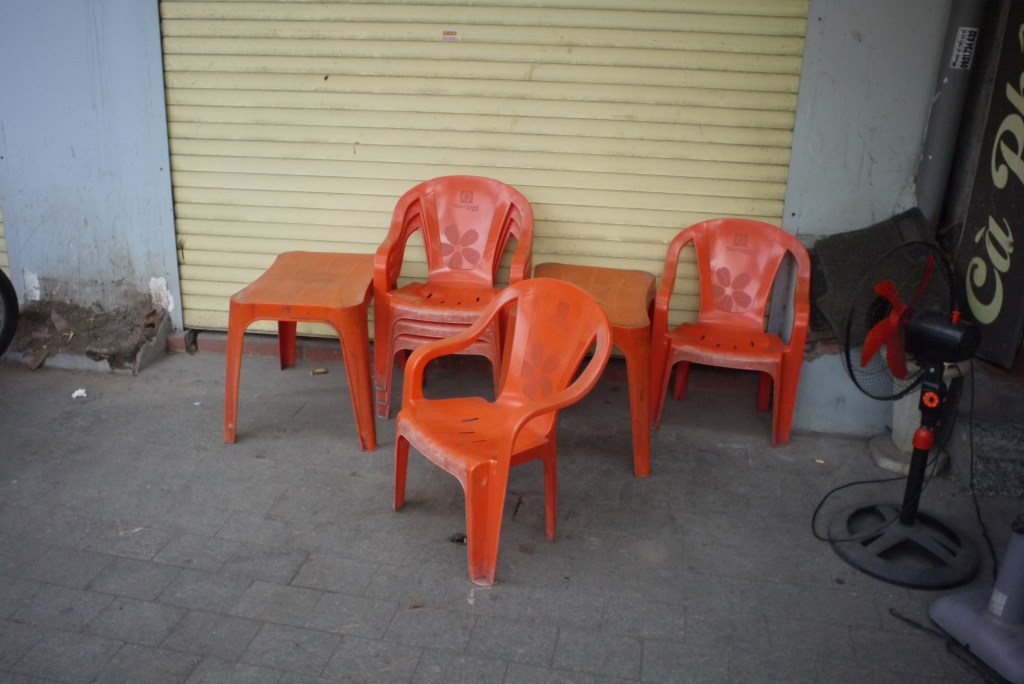
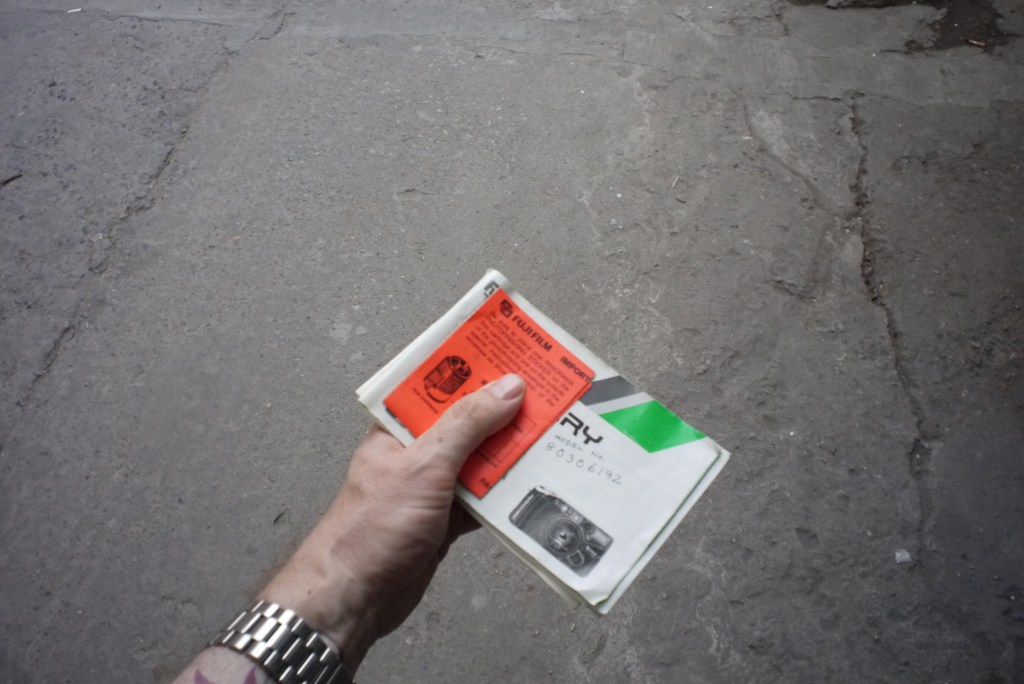
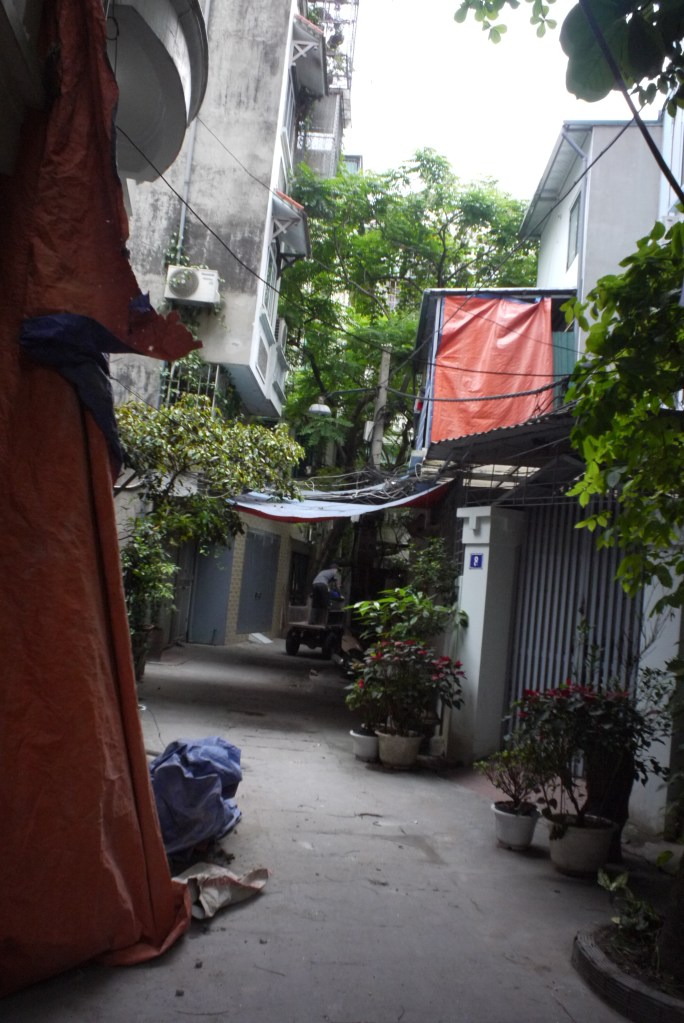
The 2nd to last photo is instructions and film canister stickers for a Fujifilm camera that Nimit gifted me – thanks Nimit! The stickers are “panorama” stickers to that the lab scans the film correctly or something. Very cool!
Having a challenge definitely helped me look at my process more closely and made it so the photos didn’t just become a blob of random snapshots. I also enjoyed shooting with the GF1 paired with a lens that gave me no options but to compose and click. It forced me to move around to get the shots I wanted or get stuck with boring eye level shots – which there’s plenty of here.
What’s your favorite photo challenge? I’m always looking for new ideas and would love to try something new. Let me know in the comments and share a photo or a link to your blog, social, or Flickr please!
Leave a comment
-
Point & shoot with Manual Control and Multiple exposure?
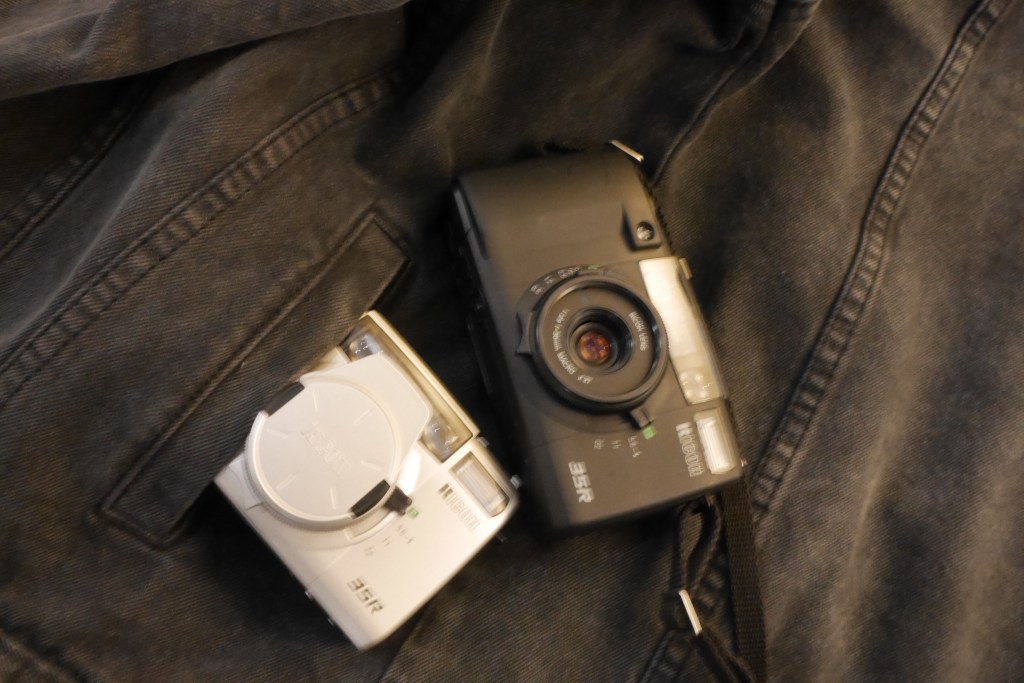
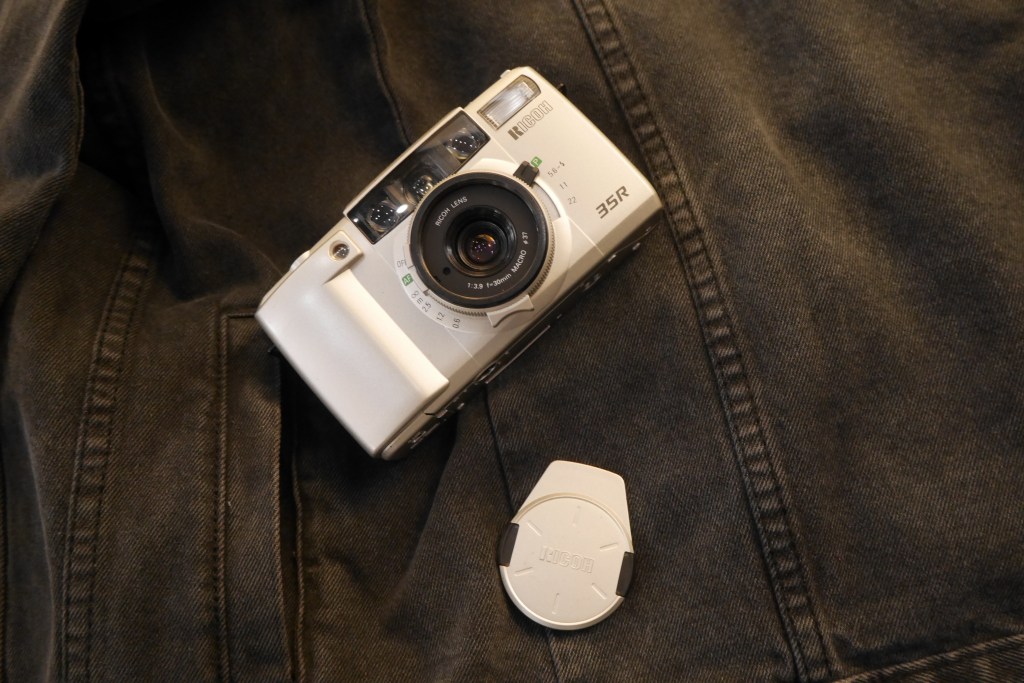
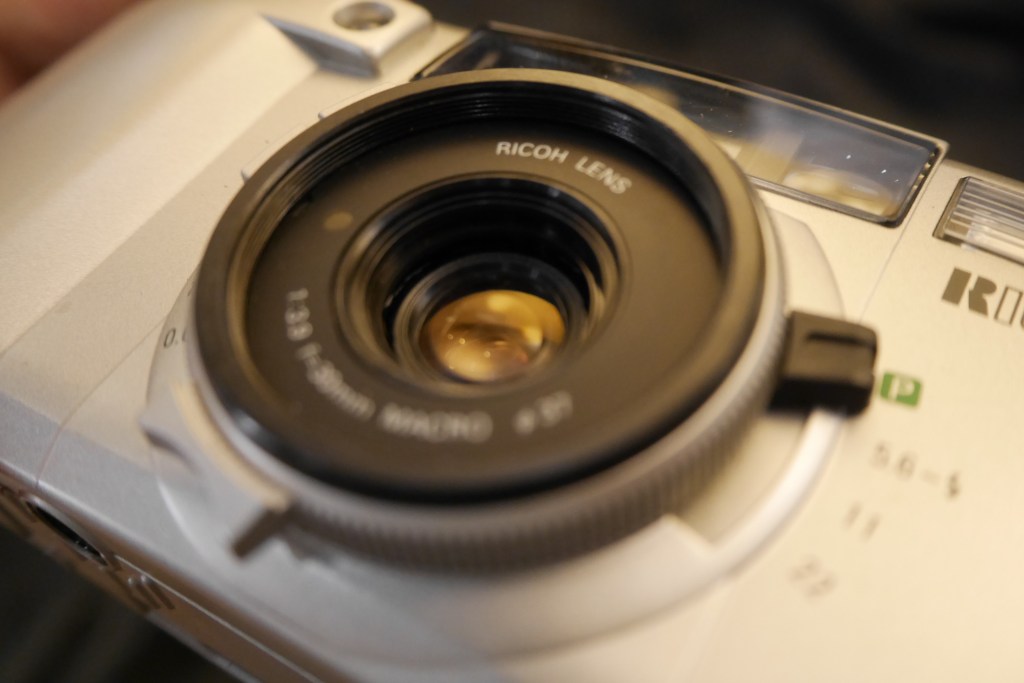
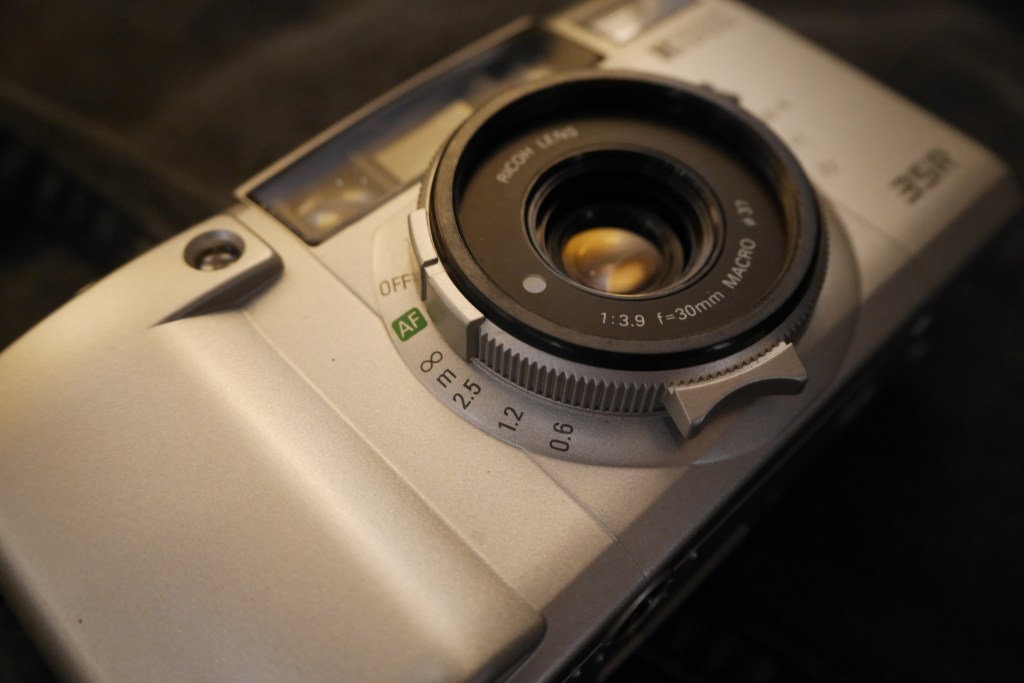
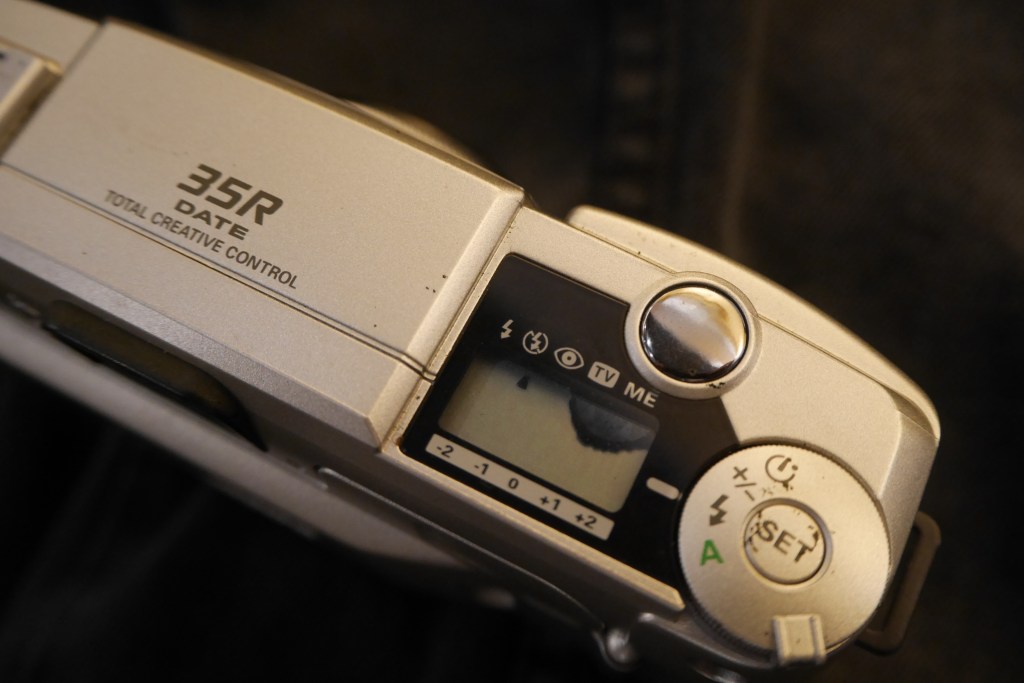
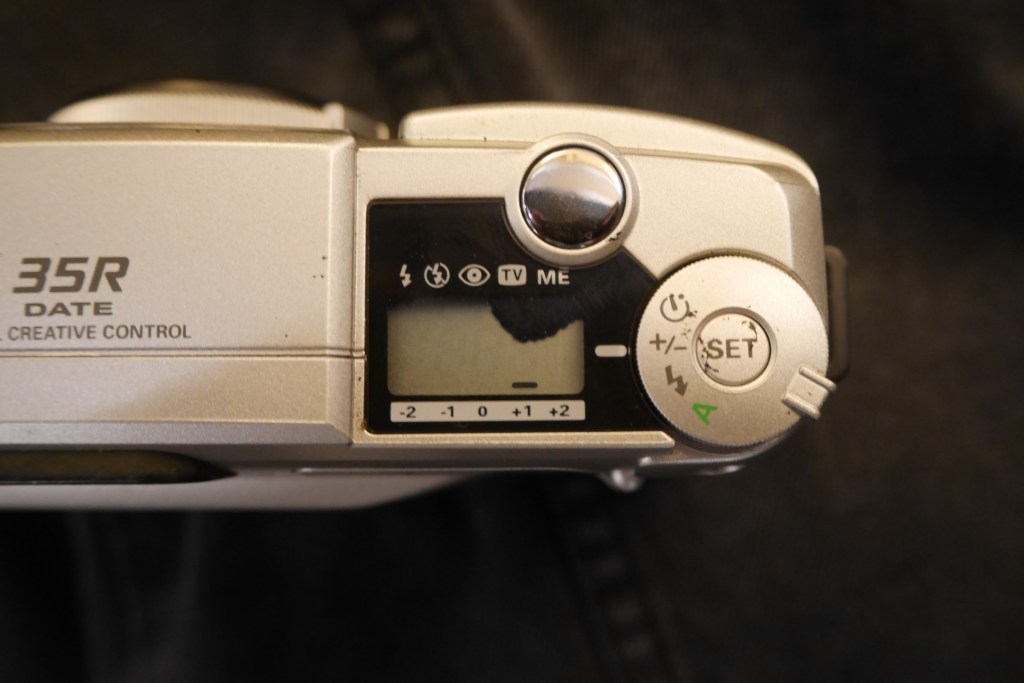

I love pocketable cameras – but aside from the somewhat expensive Contax TVS cameras, haven’t fallen in love with Point & Shoot film cameras of the late 90’s/early 2000’s. I’ve also loved the concept/ability to shoot multiple exposures hence owning both the Ricoh 500gx and the later and final Ricoh 500me (Multiple Exposure).
So why not just be happy with the 500gx or 500me? Well – if you know you know. There’s always the “if the camera could only do this one other thing”, in this case be a point & shoot when I want it to be – but a rangefinder when I have the patience for manual focusing. Also, I stupidly sold the 500gx – and even more stupidly left the 500me in the US at my parents so it would be there when I come to visit.
I had seen the Ricoh 35r/MF-1 camera around on some camera shops’ social media posts, and the idea of a P&S that has a manual focus and manual aperture override seemed cool – then I found out it also does Multiple Exposure! AND…wait for it…You can turn the flash off – completely off so no accidentally blasting some poor stranger in the street on a photo-walk. The Contax TVS can do all of this – except multiple exposure. Oh yeah, and speaking of the TVS, what about that great exposure compensation feature? The 35r does that too – sort of.
I found many articles online about the camera and had suggested it to a member of a film photography group on social media, but couldn’t find one for sale – they seem fairly cheap but also hard to come by. Then one day a guy posted one for sale in great condition, and for only $55 – so I went for it. I was excited to use the exposure compensation to reduce exposure and then take double exposure portraits, and being able to set a manual or “snap” focus distance and not worry about the autofocus missing was really exciting!
The camera arrived and I put in a roll of film. I usually shoot hand rolled Vision film (usually 250 daylight film, but occasionally the 200 or 500 Tungsten balanced film). I’d heard that P&S cameras would often break using this type of film so I opted for some Kodak ColorPlus 200 speed film instead. The weather had been cloudy, so having some extra saturation seemed like a good idea.
Here’s some unedited sample shots including a double exposure selfie…
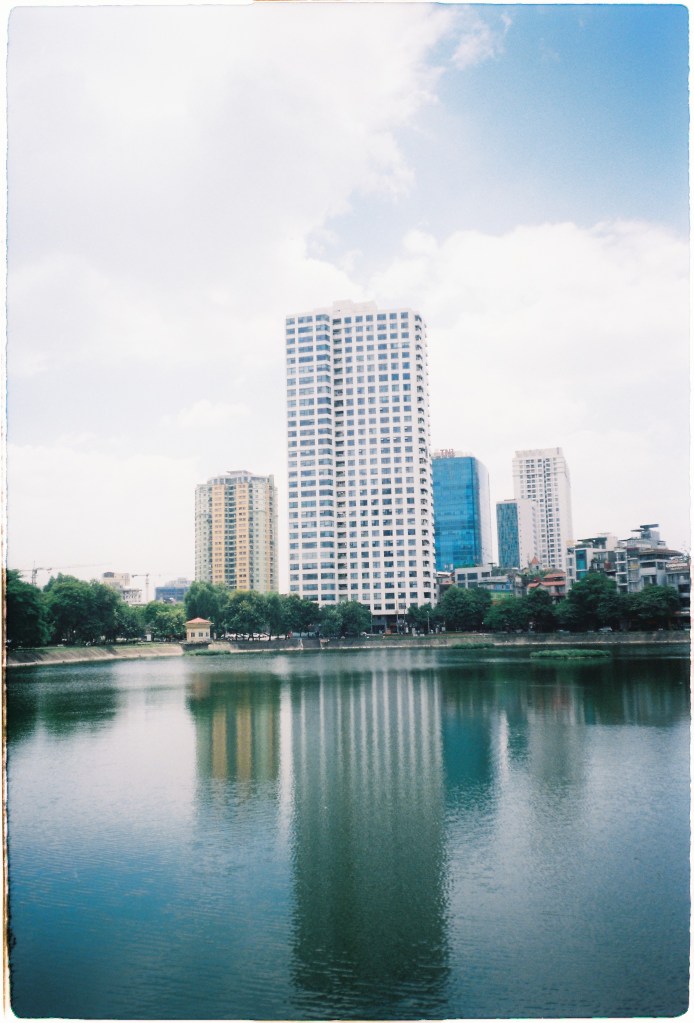


So, the good: it does take UNLIMITED multiple exposure photos. It does have manual focus, full program OR aperture priority with 3 choices (f5.6, 11, and 22). It does allow you to shut off the flash/leave it off, it’s really decent to hold and seems to have good autofocus, a nice wide 30mm lens, and proper exposure metering.
The bad: As Jörg Krüger states in his review of the camera, the myriad of excellent control features can’t all be used simultaneously due to a singular “mode setting” lever/wheel. The worst of which in my opinion is the flash-off and multiple exposure and/or exposure compensation and multiple exposure. My guess is that the camera relies on the film latitude to allow the multiple exposures to work/look good, and they assumed you’d want flash on while doing this. Why, I will never know. Also, as noted in some reviews, the automatic film winding is loud – and the autofocus makes a loud double click sound (which doesn’t matter if you focus manually). Lastly, and I missed some great shots because of this – the viewfinder offers no focus indicator other than a green light off to the side of the window – which flashes if the autofocus isn’t finding contrast or if you’re in manual mode – and goes solid green if the autofocus is both in use and focused. I forgot this and took 5 street shots with the camera focused at 0.6 meters (2 feet).
So is any of it a deal breaker? Not really for a cheap camera, but a bit disappointing – it’s like getting a sports car that has a speed regulator installed. It’s still cool, and is likely a safer bet (especially with the high cost of shooting film), but doesn’t make for the same experience. One thing I can’t seem to confirm, is that SOME of the features do work in a sort of memorized unison. Example, if you turn the setting wheel to FLASH-OFF, then to the exposure compensation settings, the camera remembers you want flash off somehow. but it can’t do the same thing with multiple exposure – and you can’t do multiple exposure with Autofocus turned on. Why? Again, no idea.
Is the Ricoh 35r a great camera? Absolutely! But using the manual or creative controls requires attention, slowing down to really be present in the process – which also sort of defeats the point of having some automation. I shot a 2nd roll of Fomopan 100 with the 35R – a silver version that I got with the black one.
I’d really like to experiment further with the 35r (also sold in a slightly different version called the MF-1). Shutting off the flash and shooting street photos at a fixed distance are features that make this camera worthwhile if that’s your thing – and it is mine! Also, trying more multiple exposures and just dealing with the flash could be fun…
Thank you for reading and happy snapping,
Daniel -
Wide angle body cap lens: Is it worth $60?
Review of the 7Artisan 18mm f/6.3 body cap lens for APS-C
By Daniel Rider
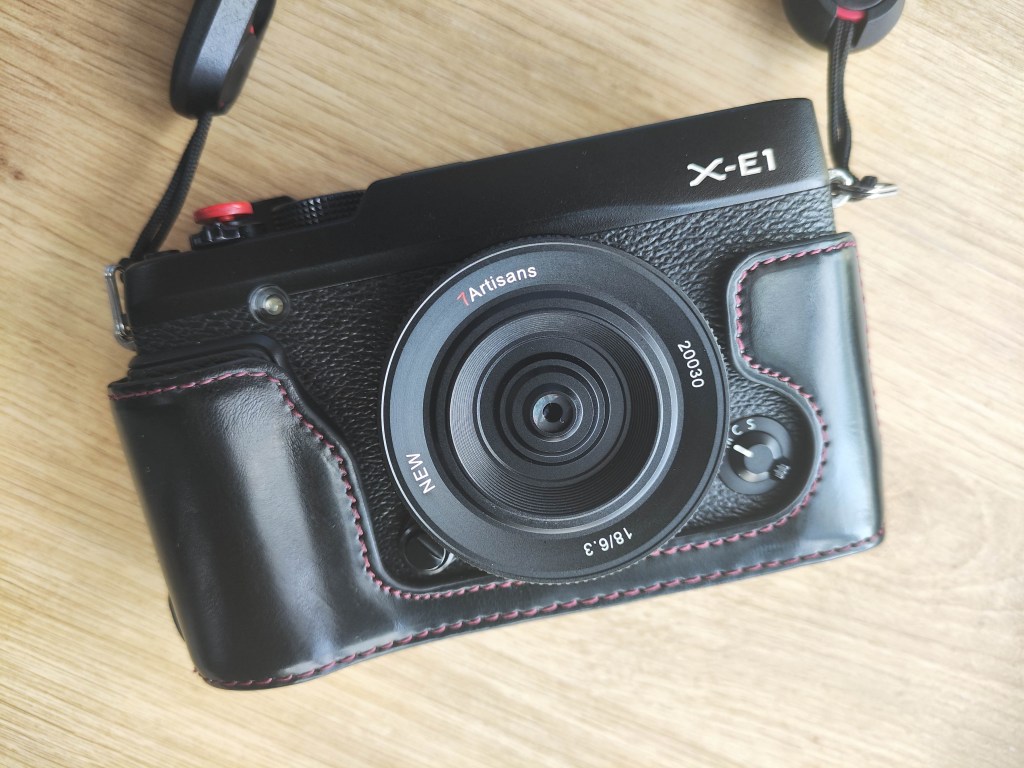
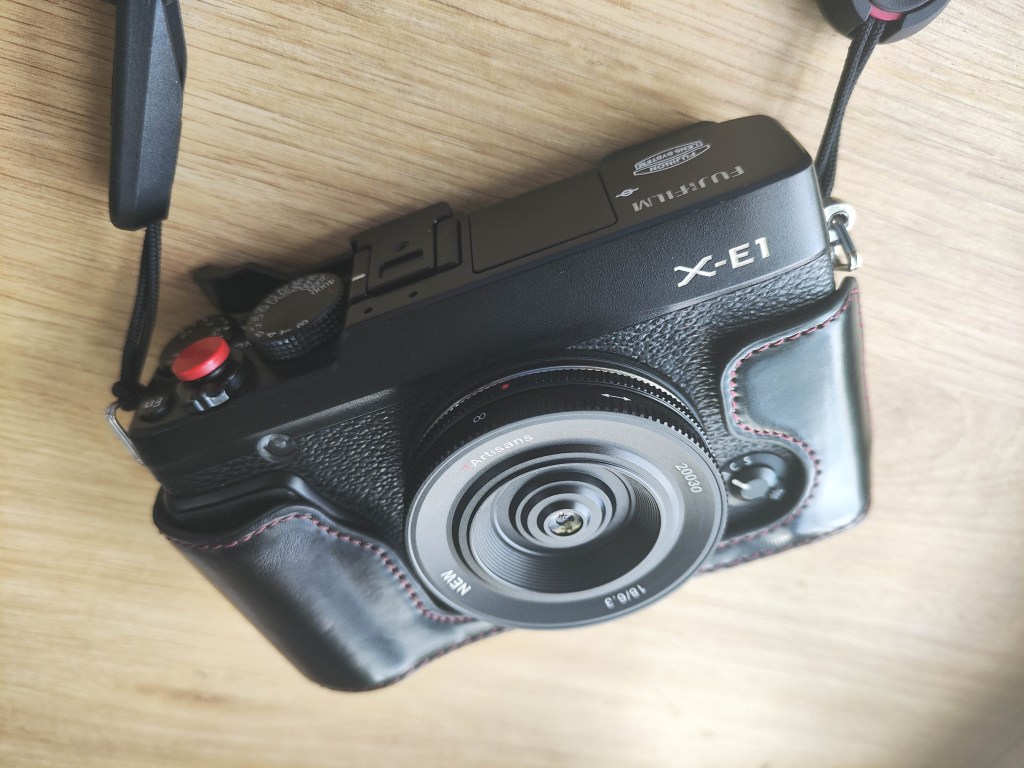
If you’ve read any of my other work on 35mmc or Casualphotophile.com, you probably know I love the concept of the wide angle (28mm focal length) and a highly capable camera that fits in one’s pocket. In my elusive search for the do-it-all perfect camera, I’ve tried many options in both film and digital. Some favorites include the Minolta TC-1, Contax TVS, and the Ricoh GR (film or digital). Each one has great strengths, and considerable shortcomings.
As an amateur (mostly unpaid) photographer, cost is always a major factor in my gear hoarding. Wanting to save money on film – I recently picked up the Fujifilm X-E1 after reading Sroyon’s fantastic review of the X-E4 (and not having the budget to get the 4th rendition). The first lens I got was the Fujinon 18mm F/2. An incredible lens with 28mmish equivalent (technically 27mm?). While I loved the photos it takes, and by SLR standards the lens is quite compact – it isn’t even jacket pocketable. And, I discovered that in my attempt to digitally simulate the feeling of shooting with my film camera, the Minolta ALS rangefinder from the 1960’s, the not-so dampened 360 focus ring on the Fujinon wasn’t any fun to shoot in manual focus mode but a cheap prime I had bought (the TTArtisan 25mm f2) was fun and much faster since the X-E1 has relatively slow autofocus anyway. With a manual focus lens – I can shoot almost instantaneously as long as my F stop isn’t too open and the focus is close to the correct distance.
Enter the 7Artisans 18mm F6.3. I had the M-mount 7artisans 35mm body cap lens for a Minolta CLE and liked it for what it was – so the concept of a small pancake/bodycap lens is familiar to me. There’s two versions (mark 1/mark 2) of the 18mm lens – we’re talking about the manual focus Mark 2 version here. The lens is a really solid metal disk with an excellently dampened focus ring (which is basically the exterior of the lens!). The fixed aperture is nearly the perfect F-stop for how I will use this lens – zone focused quick street shots where I need at least f5.8 to guarantee the subject is in focus and wide landscape shots. Having a few aperture choices would have been great – but for $60 – not likely. And not sure that making the lens bigger would be worth it.
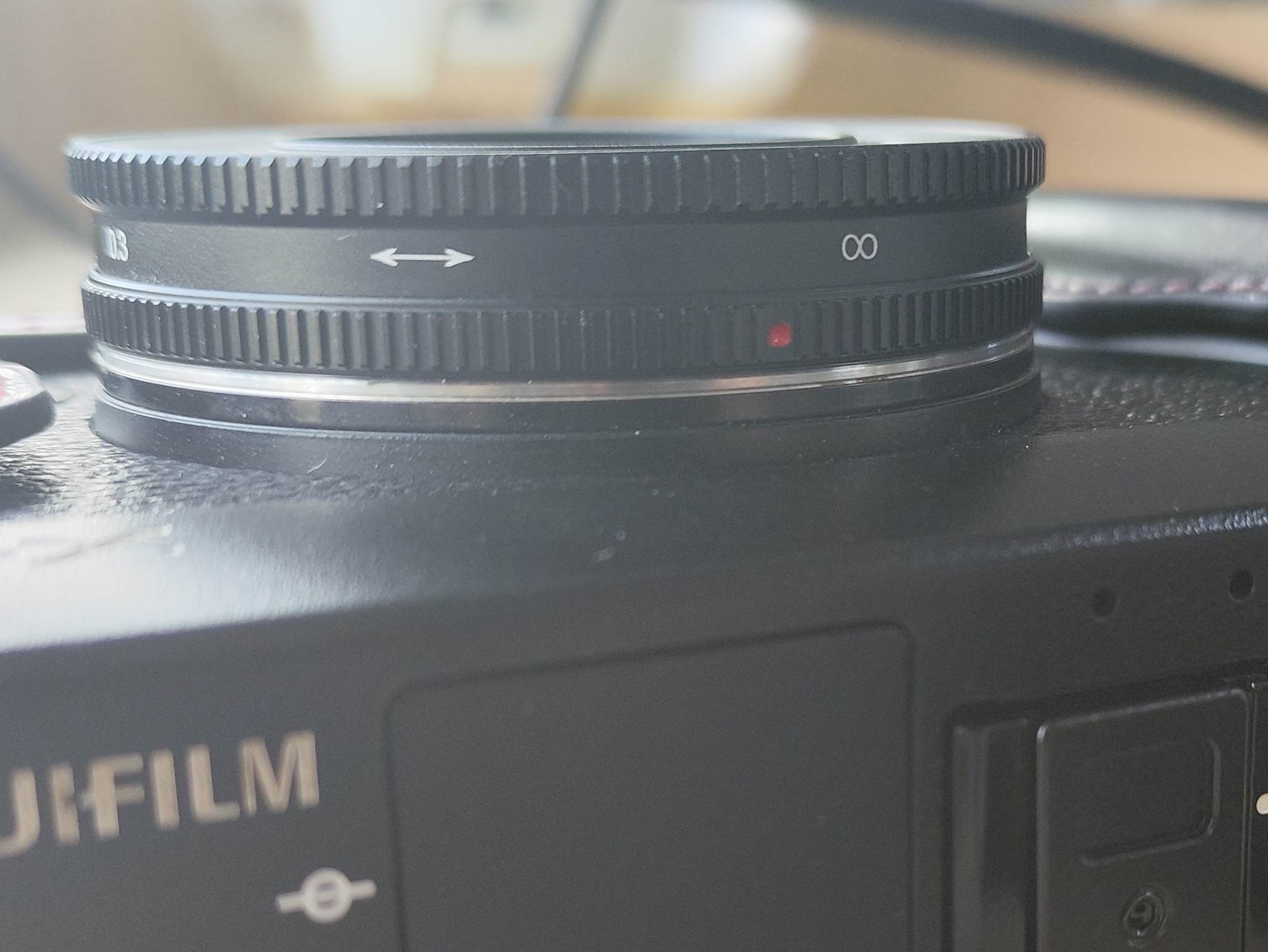
So, what kind of lens is this? It closely reminds me of the results from a Lomo LC-A, but softer. Same Vignette – but only sharp details in the very center. It has a haze when shot towards the bright sun, and the focus is mostly unmarked – from 0.3m to Infinity. To note, like many lenses, the closer distance require more focus throw, then things move rapidly the last 20 degrees from about 3 meters to infinity. I appreciate this as it allows us to hone the focus of near objects where we will have some depth of field bokeh (only a little) more precisely and to jump from 3 meters (a good average for street photography) to infinity to catch the whole landscape is easily accomplished. Below you can see the 0.3m setting, middle is the double arrows on the top of the lens (I’m guessing 2m), and infinity.
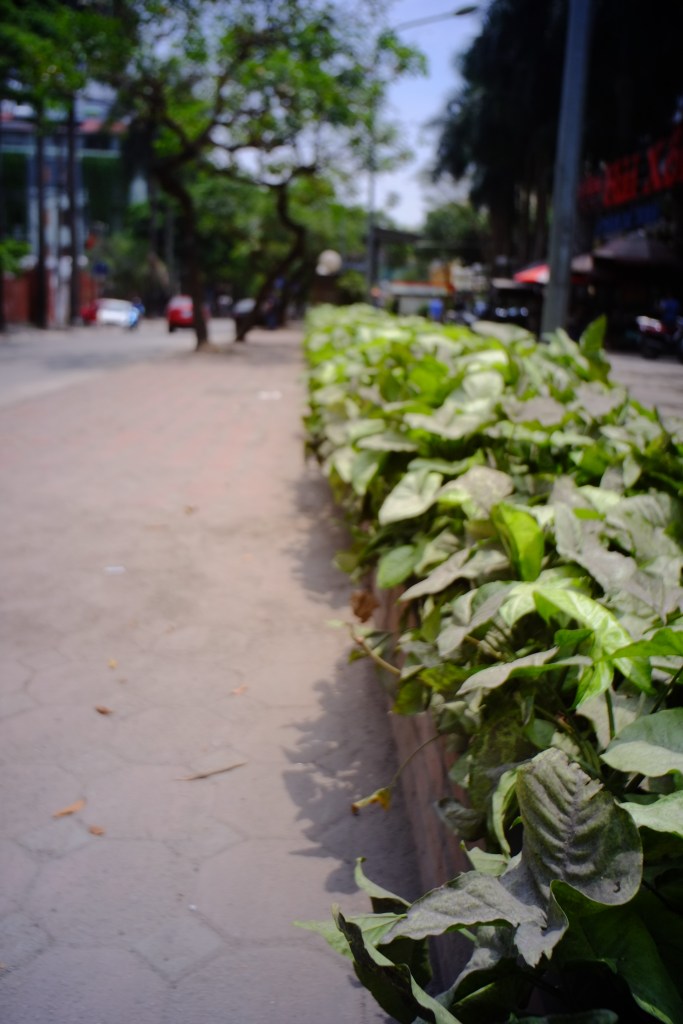


You can also note the vignette and lack of clarity near the edges. I’m not using this to compete with the Fujinon 18mm lens – which is a fantastic lens! This lens is for candid street shots when I need the camera in my denim jacket inside pocket. The X-E series is perfect for this because, unlike the GR and other highly compact cameras, the X-E series has an Electronic Viewfinder (EVF) while still being very compact. While the GR series is debatably the king of professional pocket cameras, lack of viewfinder had mine collecting dust (Yo Ricoh! Why not add a smallish EVF like the Lumix TZ series has?). On the X-E1, focus aids are back button zoom, and focus peaking which causes a white fringe around the edges of in focus objects. Shooting with this lens is sort of like having a pocket (28mm full frame equivalent) slr because you can see how the photos will look during the shot, too light/dark, what’s in or out of focus, and to what extent the lens has achieved some subject isolation if possible. As for the sharpness/details of the 7Artisan 18mm, here’s an original and cropped .jpeg.

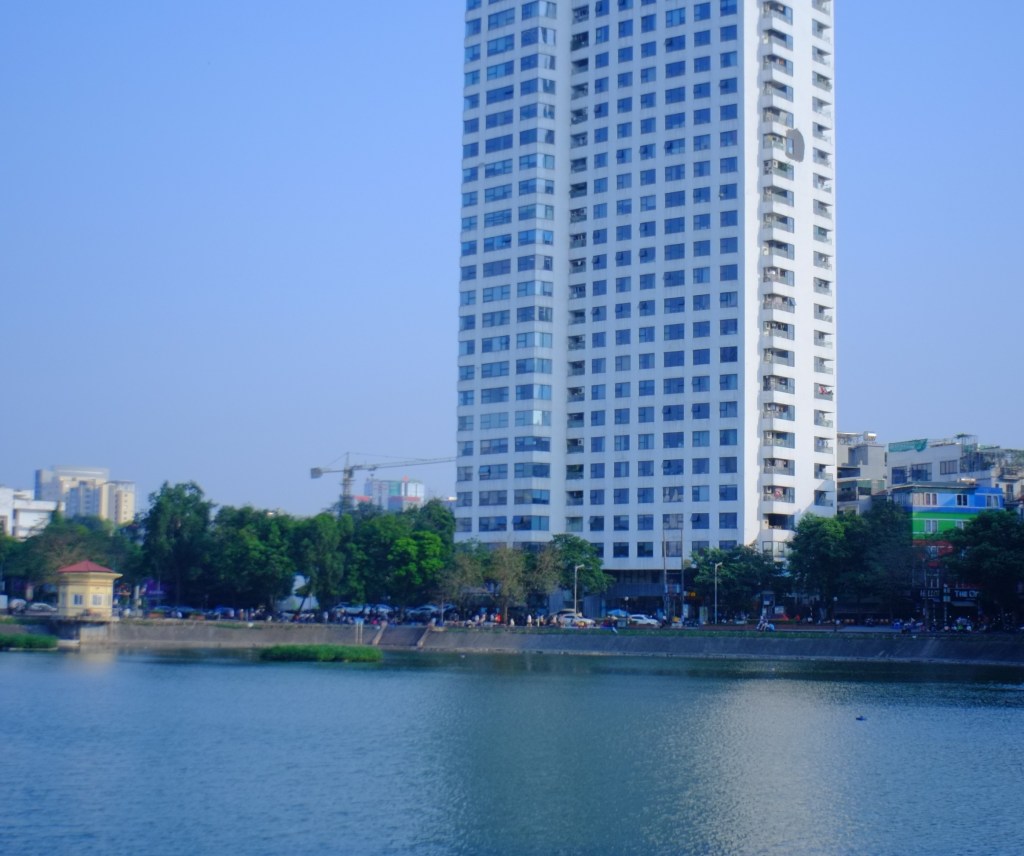
For pixel-peeping, the lens just lacks that punchy resolution that a larger lens with the ability change to f8-f22 might offer. If you’ve read this far, you’re probably not looking for a professional lens with best-in-class optical performance. Read on! Here comes the fun part!
So, I walked around shooting, using both the EVF and occasionally chimping at the screen. I was able to get some candid shots, some landscapes, and test the lens for flaring. It did great as I was expecting results similar to the Lomo LC-A, which I got. Here’s some of the best shots, these are SOOC (straight out of the camera) jpegs. The settings are supposed to emulate a color+ type of film, so perhaps poor examples of the lens’ color rendition.


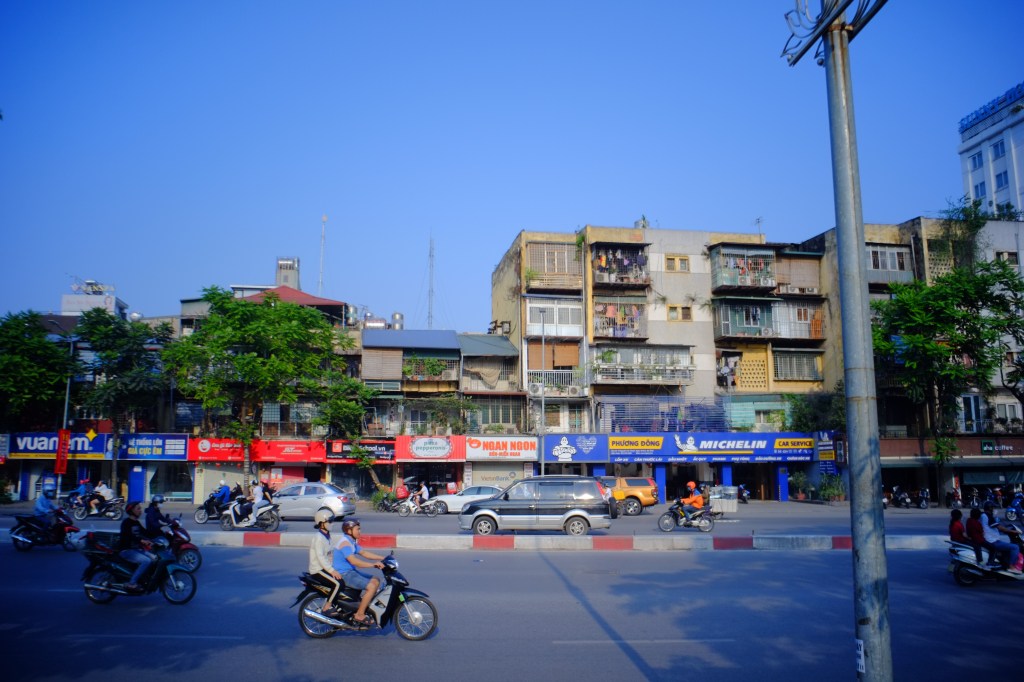
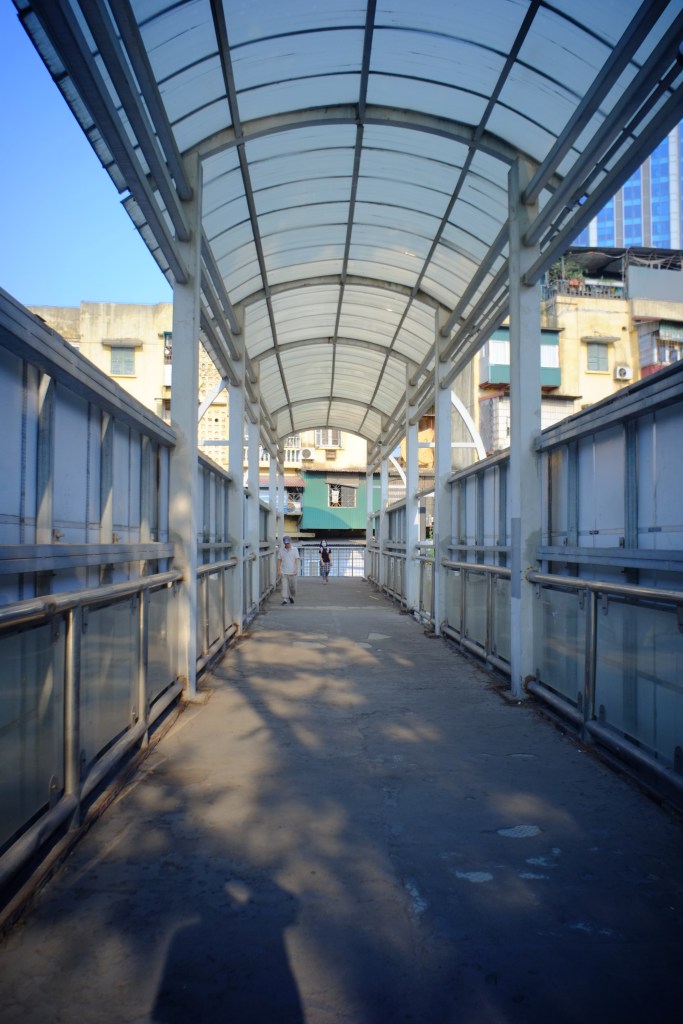
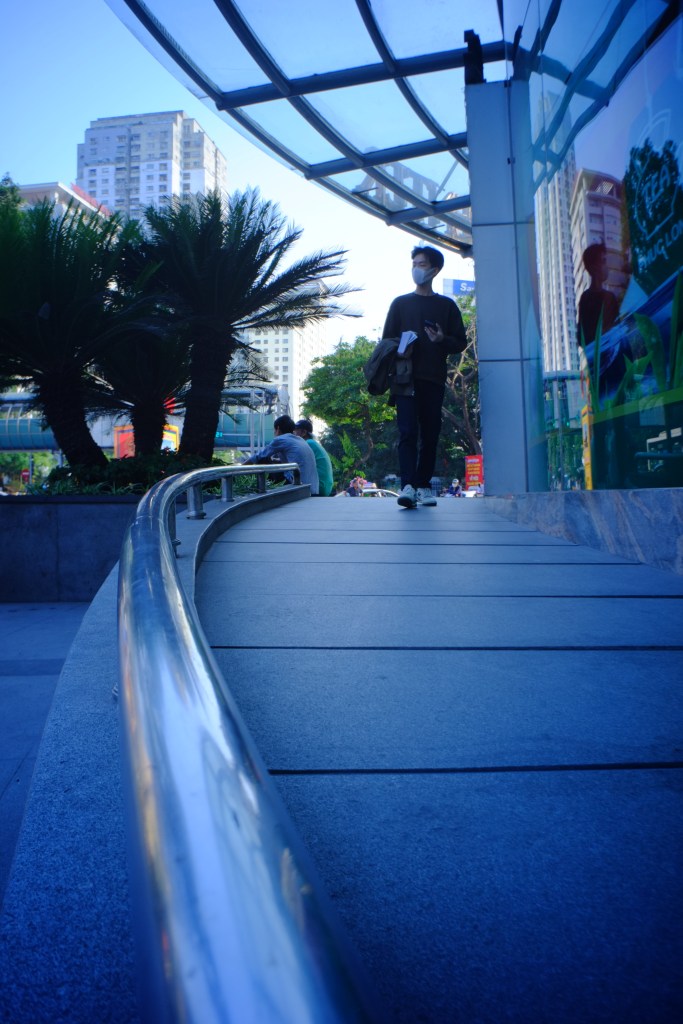

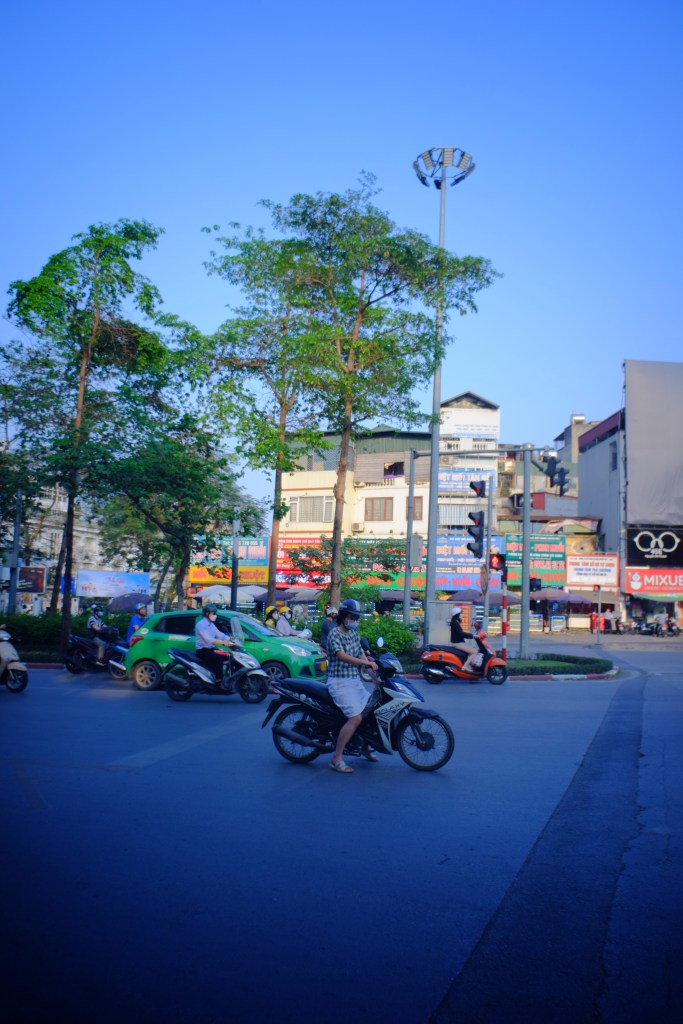
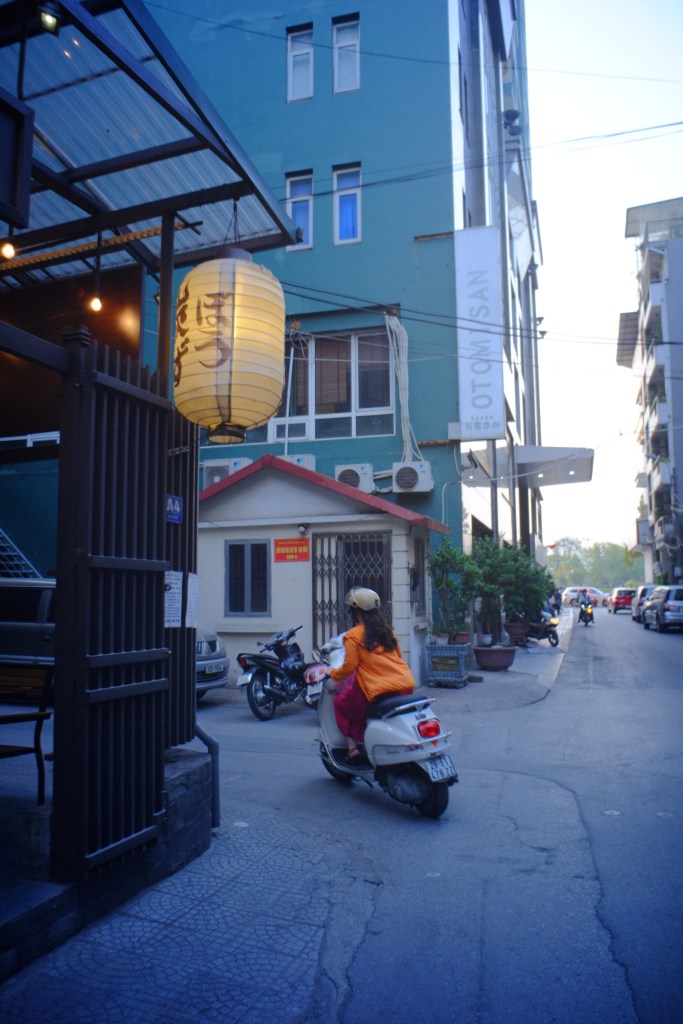
To show how the lens handles color, here’s a different custom setting where the color isn’t turned up to a ridiculous level.
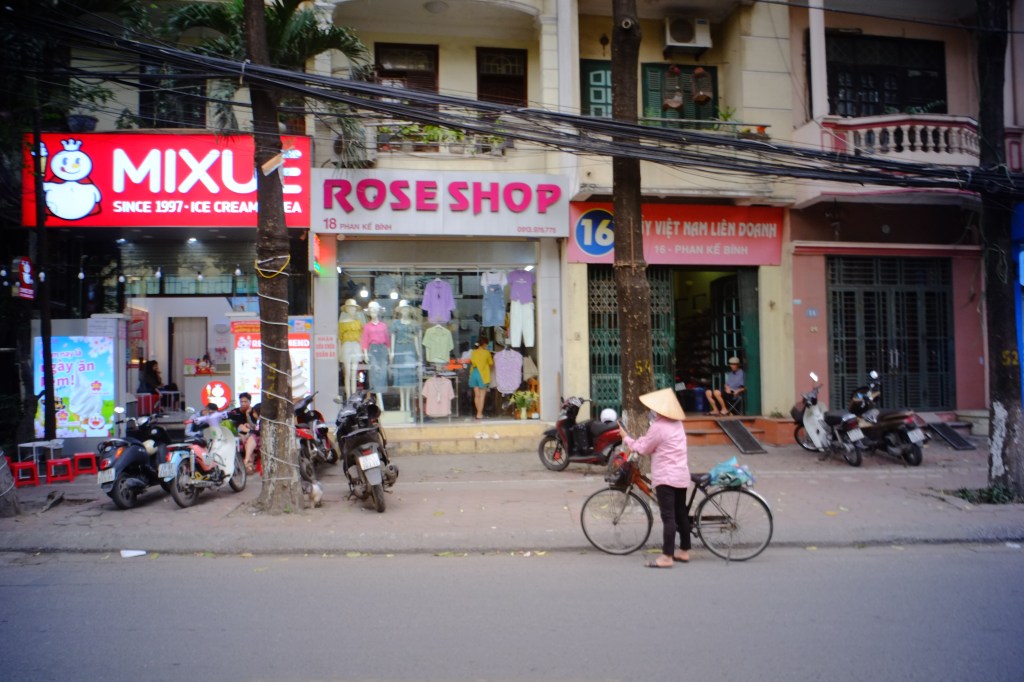
It seems to offer a slight magenta cast, but not too bad.
I love this lens for my type of photography, which is based on fun and experimentation, catching weird stuff I see while on photo walks, and not taking things too seriously. I also didn’t get a body cap when I bought the Fujifilm X-E1 (I accidentally gave it back to the seller during the exchange at a local cafe) and needed one anyway. Now I’m wondering when I will take it off to use a “real lens”. Not anytime soon.
To get your own 7Artisans 18mm f6.3 with fast shipping and guaranteed delivery, consider using my affiliate link here. I promise to continue shooting photos and posting more reviews of street and travel photography gear.
What are your thoughts on this lens? Love it, hate it, or can’t live without it? Let me know in the comments…
-
The Ricoh GR: World’s greatest street photography tool?
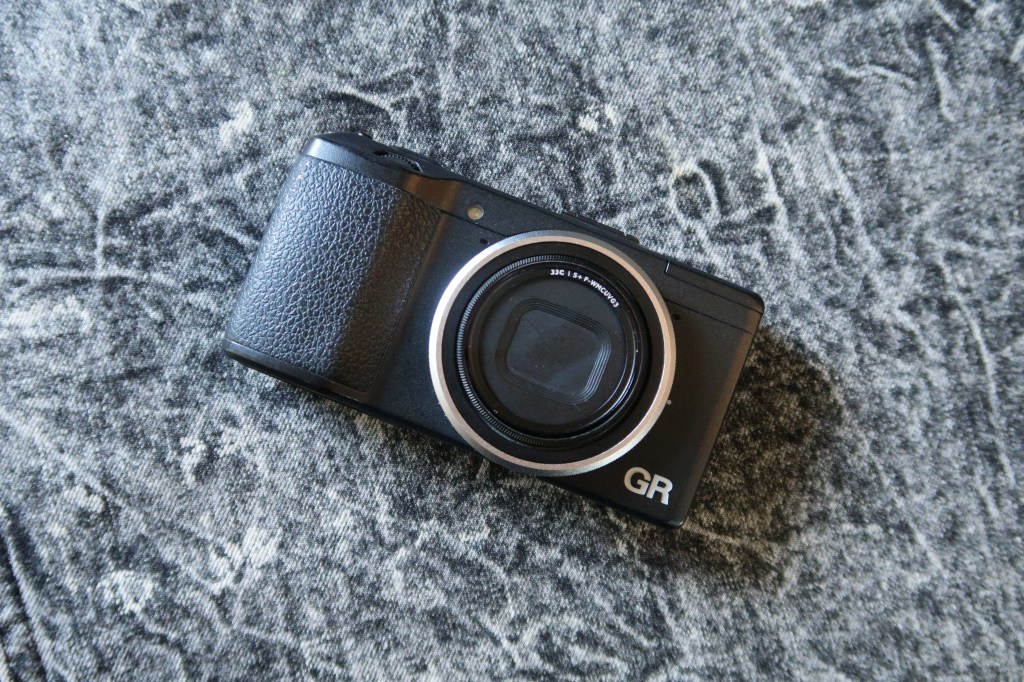
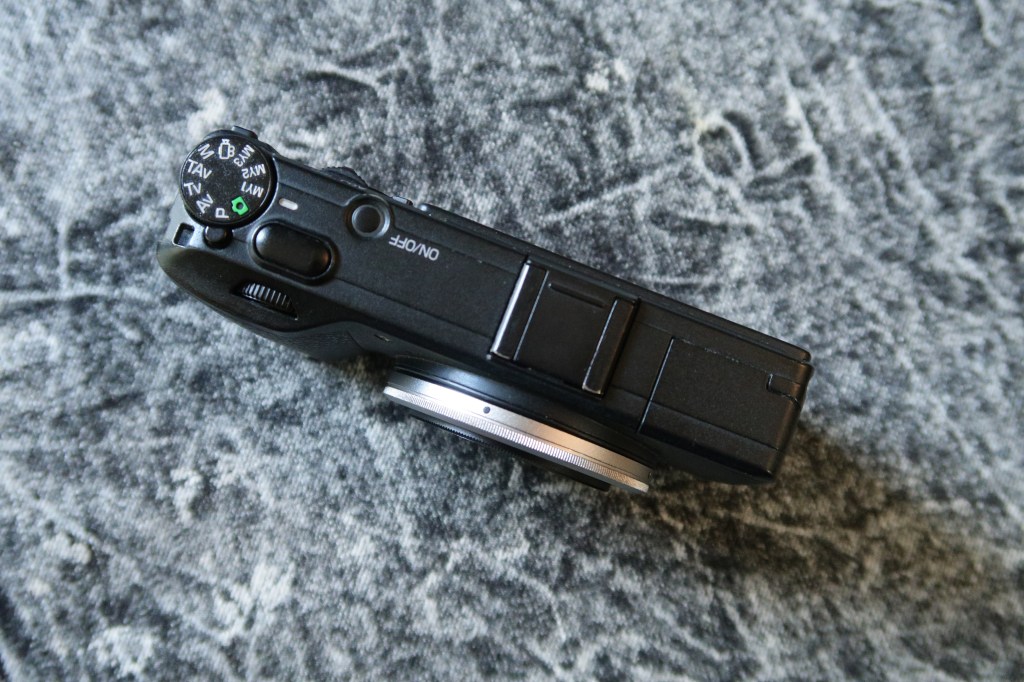
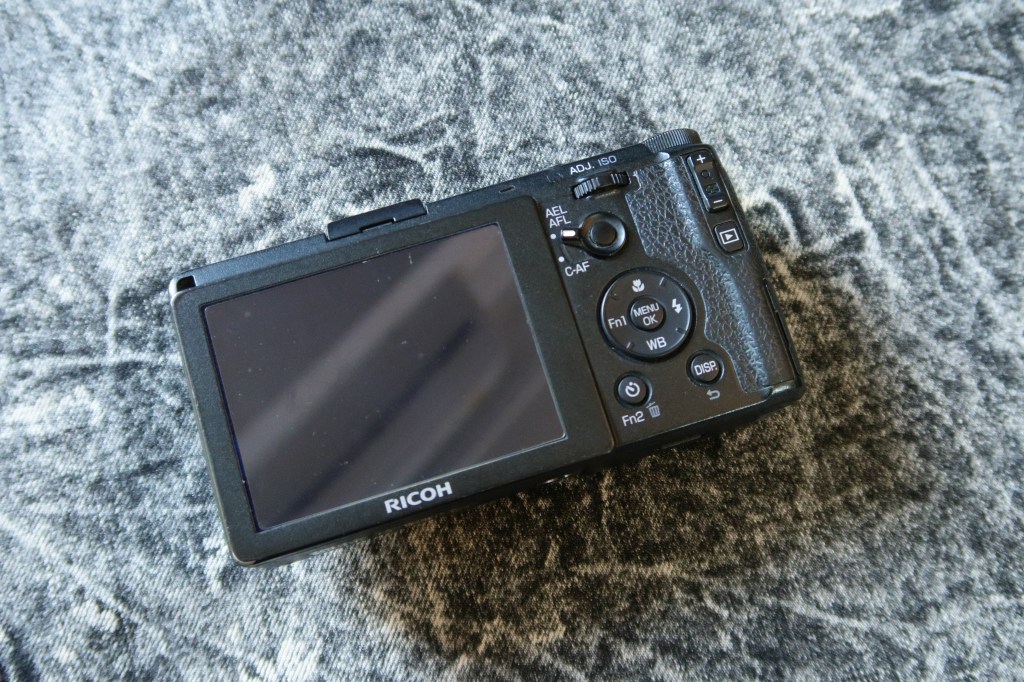

The Ricoh GR is one of the most successful camera productions of the past 2 decades – evidenced by the continual release of new versions. While at a glance – the camera has few design changes other than the dimensions/placement of buttons since the original version was released as a 35mm film camera in 1996. However, the most recent version as of this writing is referred to as the Ricoh GR IIIx – which deviates from the wide angle 28mm focal length the GR series is renowned for and instead is equipped with a standard 40mm equivalent focal length lens. More on this change later.
I first discovered the GR series at a local camera shop in Hanoi. They had a Ricoh GR10 which seemed like the better choice than the GR1s which they also had. The GR10 didn’t work right from the start. It’s a budget version in most respects of the GR1, and mine was dead on arrival. The shop allowed me to return and pay double the price for the GR1s. Just the feel of it was an indicator that I was now holding a much better camera. The GR1 is a magnesium body with plastic, metal, and glass sub-parts. I loaded some film and got 4 rolls before the flex cable snapped and I was left with a paper weight. Back to the shop I went. This common issue which dooms all 35mm film GR’s to a certain yet random death is talked about at greater length here.
Saddened by the short-lived experience with the GR1s – especially after getting some photos back from the first few rolls of film I shot with it, I longed for a solution but was not willing to waste another $600 on a paperweight.
I tried the even cheaper Ricoh R1s, and loved the results and much lower price, but the lack of manual controls and premium features like SNAP – which allows the photographer to take a photo at a predetermined focal length without focus delay for candid street shots – was missing. To note, the R1s doesn’t have the same lens – it has a 30mm lens that can be switched to a 24mm ultra-wide panorama mode. Very cool!
So, what could I do to enjoy the incredible Ricoh GR lens without wasting a fortune on fallible cameras? Go digital! But wait – why go digital? Isn’t film photography the best? Yes and no. Film photography is great for the rich or people that have a purist notion about shooting film, or those that have a darkroom – and many other scenarios that I won’t go into. I still shoot film, but the benefits of the GR series form factor, one of the best ergonomic camera designs, and a host of really cool features that I do dare to say make the film version obsolete. And these features are what we are going to dive into here.
I first ordered the Ricoh GR “digital” III – a 2011ish 10-megapixel version of the GR. It got dust on the sensor which is the one downfall of these digital versions vs the LCD and flex-cable failure of the film versions. The 10mp version can focus as close as 1cm in macro mode! It has a broad range of artistic filters – most of which emulate films. Unfortunately, the GR Digitals (as they were called pre 2013) are too difficult to open and remove dust from the sensor. So I found a 2013 Ricoh GR which is a bit larger to hold, but still pocketable and with 16 megapixels and even more advanced features/filters. My favorites are Positive Film – which simulates the look of 35mm slide film, and High-Contrast B/W (Monochrome). The latter resembles a slightly grainy film pushed to a higher iso (think Tri-X 400 pushed to 1600). Here’s an example of the high-contrast B&W (unedited)…
The GR lens combined with this filter makes a statement. The lens resolves so well, and this filter creates images that almost make the viewer (that’s you!) think I know what I’m doing. I also discovered enhanced film simulation options at Richie’s site, https://ricohrecipes.com/. There’s some really great stuff, and in the process of adding these to my Ricoh GR – I got a deeper insight into the camera’s sub-menus including how to adjust the white balance by temperature and color.
Another interesting feature about the body of the Ricoh GR non-film cameras is that the bodies can easily attach filters which wasn’t an option until the film GR1v – which costs about $800-1000 if in good working order. My GR came as a combo with a filter attachment and a cool square funnel-shaped lens hood. I put a circular polarizing filter on plus used the “cross-process” filter to get these shots:
The recent GR series (megapixels rather than film) have one flaw – dust can enter through the lens extension parts/process when the camera is turned on/off. My 2nd purchase of a non-film GR – the 16-megapixel version from 2013 had this issue too. My past tinkering with mechanical camera repairs was an asset as I was able to follow directions on a site that explains how to open the camera and by using a camera air blower (don’t use canned pressurized air) was able to clean the filter – resolving the issue. You can find instructions here.
If you want to avoid this, the aforementioned filter attachment can isolate the lens during extension and protect it, but it adds bulk. What I chose instead was a cheap jjc lens cap available at my affiliate link here. This keeps dust off the lens housing so there’s no dust to get sucked in when you pull the GR out of your pocket for a candid street shot without the time to use a lens brush or cloth to wipe it before turning the camera on. If you forget the cap is on – it just falls off when the lens extends, and you’ll still get that shot! Also, to test for this if you’re buying used – in person, set the aperture to something small like f8 or above and take a photo of a sheet of paper or solid colored wall. You’ll see a dot on the image where the dust is. You can ask the seller to do this if buying from an online marketplace – just be sure to ask for the raw file so they don’t edit it and send a .jpg.
I found the GR performed exactly as I had read for candid street photography on a recent trip to Bangkok, Thailand. I was able to get many shots while remaining discreet so that people wouldn’t change their expressions. Also, the lens on this camera devours inner city landscapes and then freezes them in a highly resolved way. I haven’t found another camera that can quite do it exactly like the GR even at similar focal lengths and settings. More sample shots…
The most recent versions of the GR are limited edition colored bodies like the Diary Edition, Street Edition, and also the 40mm equivalent Ricoh GRIIIx. All of the GR (I, II, III and IIIx) have a digital crop feature that can be really nice for framing. For example, say you want to frame shots at 35mm equivalent rather than the wide 28mm, you can choose this and even assign it to a FN button. Each model has 3 options – the 28mm GRI/II/III has 28mm, 35mm, and 56mm crop. I love this as I also love the Contax TVS camera – but the GR gives a faster f2.8 aperture! Some people don’t like this as it just crops the photo digitally rather than being an actual zoom or new focal length. The camera has such a large sensor and sharp lens that I found jumping from 28mm to 35mm cropped was still great. Another option is to shoot raw+jpg so you’ll still have raw at 28mm.
One important difference from the GR I/II vs the GR III is that the GR III doesn’t have a pop up flash. For me personally – while I rarely use it, having the flash is useful. I believe this design choice was made to pack more performance into the GR III with a byproduct that low-light noise will be reduced enough to not need a flash. One case where the flash is useful is taking photos that have bright sky backlighting – in my case cherry blossoms on a tree mid-day taken from below. It’s such a rare situation that can also be resolved in post-processing so I call it a wash.
So to recap, if you’re looking for a camera that can fit in your pocket and go everywhere, has a robust feature set, and an amazing lens in your choice of either 28mm or 40mm (equivalent) focal lengths, but you also want a more professional feature set/large sensor – the Ricoh GR series should hit the spot.
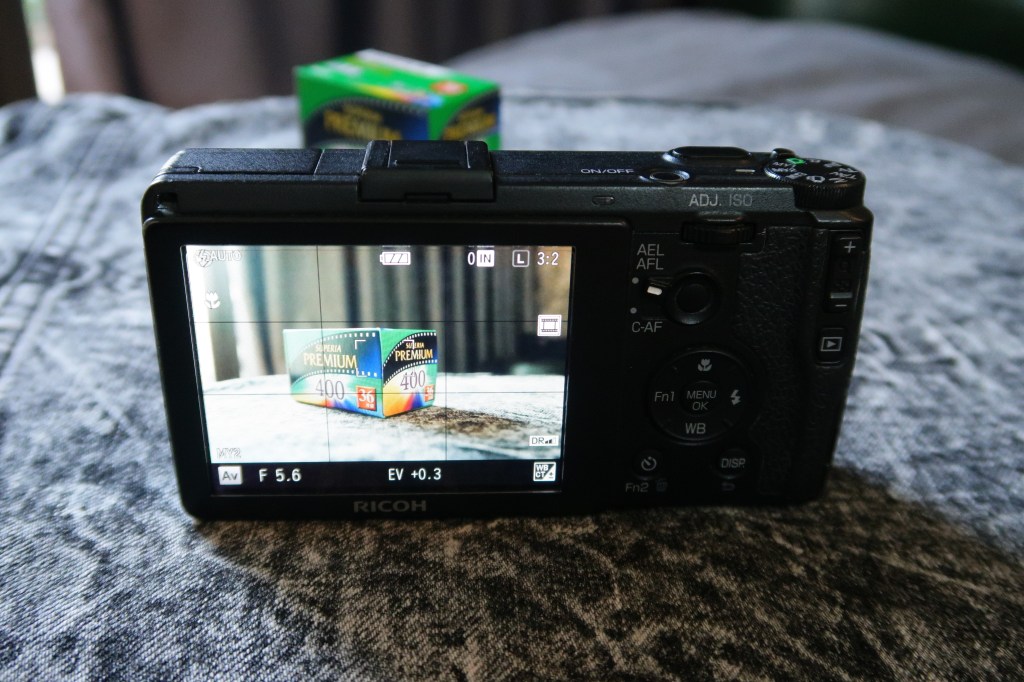
As for lack of viewfinder – there are external shoe-mount viewfinders for it, but my solution is to just imagine that I have a massive 3” viewfinder on the back – sort of treating the whole camera like a little window into reality that freezes moments for me to view later.
To get your own Ricoh GR and help support a photography blogger – please consider using my affiliate link and get yours here. Thank you and happy shooting!
References:
Buyer’s Guide on Japan Camera Huter
-
Iconic Pocket Cameras
Olympus XA film camera designer Yoshihisha Maitani.
Yoshihisha Maitani became employed by Olympus in 1956 and was a designer for over 40 years with the legendary camera company. He is well known for designing 3 of Olympus’ most loved cameras, the Pen F half-frame SLR, the Olympus OM1 – one of the most compact full frame SLR cameras, and the Olympus XA – one of the smallest film cameras to include a range finder, sliding cover, and aperture priority metering.
His goal with the OM series was to reduce the size of the typical SLR (single lens reflex camera) by half. He used the competitor Nikon’s flagship camera the F series as the reference point. He succeeded by creating the OM-1 SLR then later eclipsed his own success by creating the Olympus XA – world’s smallest rangefinder full frame (135mm film) camera.
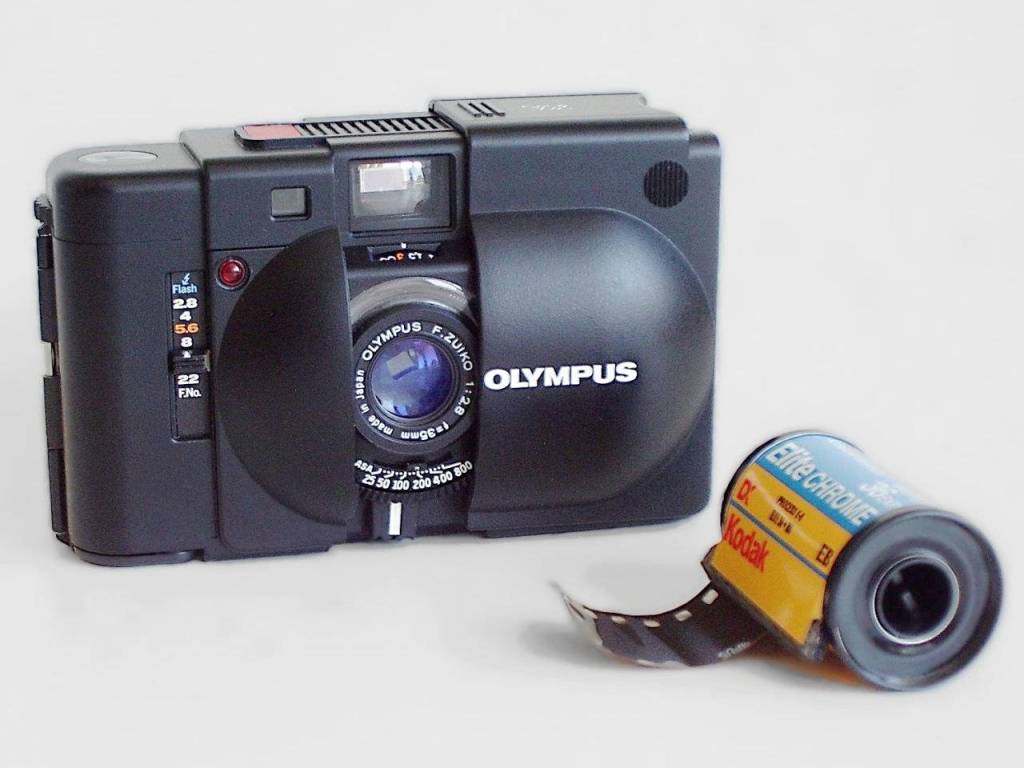
https://www.lomography.com/magazine/1436-olympus-xa-staff-review The Olympus XA can fit in a pants pocket, has aperture priority which allows the photographer to decide on the depth of field and indirectly the shutter speed, and has a rangefinder for precision manual focusing. The camera also includes a sliding “clamshell cover” to protect the lens, a battery check switch which also functions as an exposure compensation switch for backlit scenes or a self timer.
What makes the camera additionally impressive is the sharp and fast 35mm f2.8 lens. It’s a semi-wide lens that has great performance – though some complain that there’s light fall-off and vignetting when the aperture is set below f5.6.
Having a full frame camera that fits in your pocket with this feature set is still very rare today as the camera industry shifted to equally small but fully automated cameras that have few if any artistic control options.
The Contax T
Another contender for the best pocket camera is the Contax T. Released in 1984 by Kyocera under their partnership label with Zeiss called Contax (which was a prior Zeiss brand of rangefinder from decades earlier). The brand hired F.A. Porsche for the product design and the combination of the best in class Zeiss lens, titanium body, and a robust feature set make this one of the best pocket cameras ever made. While significantly more expensive and a bit larger than the Olympus XA, the Contax T has a much more premium finish and comes in either silver or black.
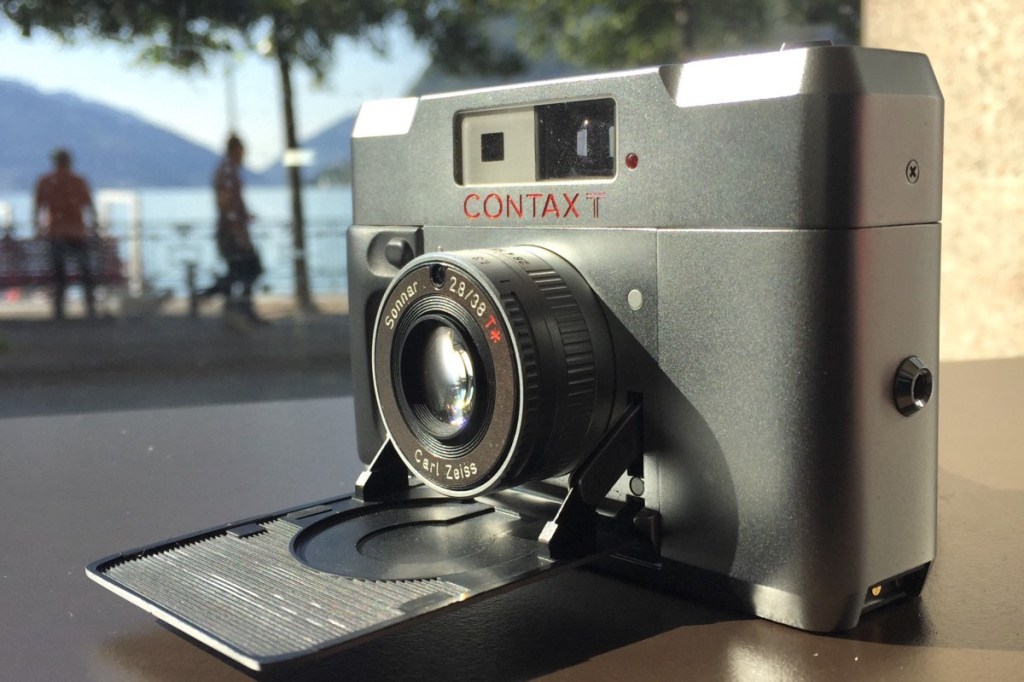
Source: https://medium.com/@jeanheintz/contax-t-a-hidden-gem-5731de139069 This collaboration is very rare when considering the range of products F.A. Porsche has developed in their design studio – from watches to car accessories, to partnerships with Chinese phone maker Huawei. The sleek design has many references to features we see in the Porsche design ethos such as attention to detail and finely crafted parts – in this case a synthetic ruby shutter button. The lens, a Zeiss 5 element Tessar 38mm f2.8 is highly regarded by photographers and was reused in the Contax T2. This is also a pocket rangefinder with manual focusing and a nice hyper focus feature: When the aperture is set to F8 (which is marked in neon green on the aperture ring surrounding the lens barrel), and the focus is set to the green dot on the focus ring, the camera is said to have almost all back/mid/foreground elements in focus for any shot. This essentially makes this camera faster than a point and shoot!
The Ricoh GR
The original GR1 (top) and the GR digital (bottom).
The next camera differs from the previous two in that while highly pocketable, it is a fully automatic camera that has the option to shoot in aperture priority and has a unique rapid focus feature called SNAP, more on this later. This camera is the Ricoh GR.
In addition to having a full program mode versus aperture priority only, the GR1 has a built-in flash, exposure compensation plus or minus up to 2 stops in half stop increments, additional electronically controlled modes, and a super cool viewfinder with focus indication overlays.
https://www.dpreview.com/forums/post/65549632
Obviously none of these cameras has a “through the lens viewfinder” like an SLR, but they do give us awareness of our focus point and in the case of the autofocus GR1, the indicators in the middle of the viewfinder let us know that focus has been achieved – and we can refer to the zone indicators of flower/person/people/mountains to be sure that we aren’t missing the subject.
One of my favorite features of the Ricoh GR1 series is the SNAP focus. This is a preset focus distance (2 meters or about 6 feet) which allows the camera to take a picture in about 1 second (or less) in the event that you’ve stumbled on a perfect street photo moment that won’t last. This setting overrides the autofocus and works great for close distance shots in crowded areas with almost no delay.
James over at casualphotophile.com has a great review of the last iteration, the Ricoh GR1v. This version offers DX coding override and allows the user to set their own SNAP focus distance, plus a few other minor but useful updates. My experience with the lens is that it’s one of the best 28mm lenses with a reasonably fast aperture of f2.8. It’s an incredibly sharp lens with beautiful color rendition and resolution.
This camera is so well designed and the user experience is nearly flawless. Unfortunately (for those who don’t own one yet) this has increased the price significantly, as has decreasing quantity due to the LCD on top and in the viewfinder failing. Further, the flex cable that attaches the shutter – and possibly the aperture to the camera’s exposure electronics and controls will often break as it is over 20+ years old and has been bent as the lens protrudes possibly thousands of times. The flex cable is replaceable, but I have yet to find a solution for the LCD failure.
In my pursuit of the perfect camera, I discovered a solution to owning a GR and not worrying about it failing – as mine did – after shooting a once in a lifetime roll of film: Buy the Ricoh GR digital camera. There are 2 series of the digital GR with confusing naming conventions. The first series, the Ricoh GR Digital uses a smaller sensor and lower megapixel count but is actually wait for it… smaller than the GR film camera! It also has a macro focus of 1 centimeter! Option B, keep buying and shooting the original film GR1 series ‘til death – and as others have suggested, use the GR1V as it’s the most recent one and perhaps less likely to fail. I was also advised by a fellow photographer to avoid hand rolled film as it may stress the motor on automatic winding cameras.
The next article will be specifically about the Ricoh GR digital versions, so stay tuned! If you enjoyed this article and want to get your own Ricoh GR III, please support me by using this affiliate link if possible.
Thank you for reading,
Daniel
Sources:
https://www.digitalcameraworld.com/features/the-man-behind-the-olympus-om-camera-yoshihisa-maitani
https://gear.vogelius.se/-editorials/olympus-xa/index.html
https://en.wikipedia.org/wiki/Contax_T
https://en.wikipedia.org/wiki/Porsche_Design
-
Happy 2023! As the year has ended and the new one began, I’ve added a best of 2022…
2022 was an incredible year for me, and I hope for you. With so many changes and unexpected turns due to Covid-19, the economy, immigration policies in both countries I lived in – I’m just happy to be in one piece!
Some highlights of the year were getting published to the world famous Casual Photophile blog where I got to share about discovering the Contax TVS and some adventures in Bangkok – a few of the photos were chosen for my best of 2022.
I also sold some dream cameras both due to the financial challenges migrating back to Vietnam posed and just to get rid of the ones I don’t shoot with often – as a nomadic person I can’t be a collector. The list includes the phenomenal Nikon 35ti, the Minolta CLE, and the Contax G1.
I’m looking forward to a new year, and many more photos. A very special in depth review will be out by the end of the month – so be on the look out! I will give you a hint… It’s digital but modeled after one of the greatest film cameras for street photography ever made (debatably).
And – if you’d like to check out the gallery, the link is top of page or you can click here to see my pics for best of 2022. Cheers to your health, happiness, and prosperity in the coming year!
-
You don’t need deep pockets to enjoy the Balda CE35.
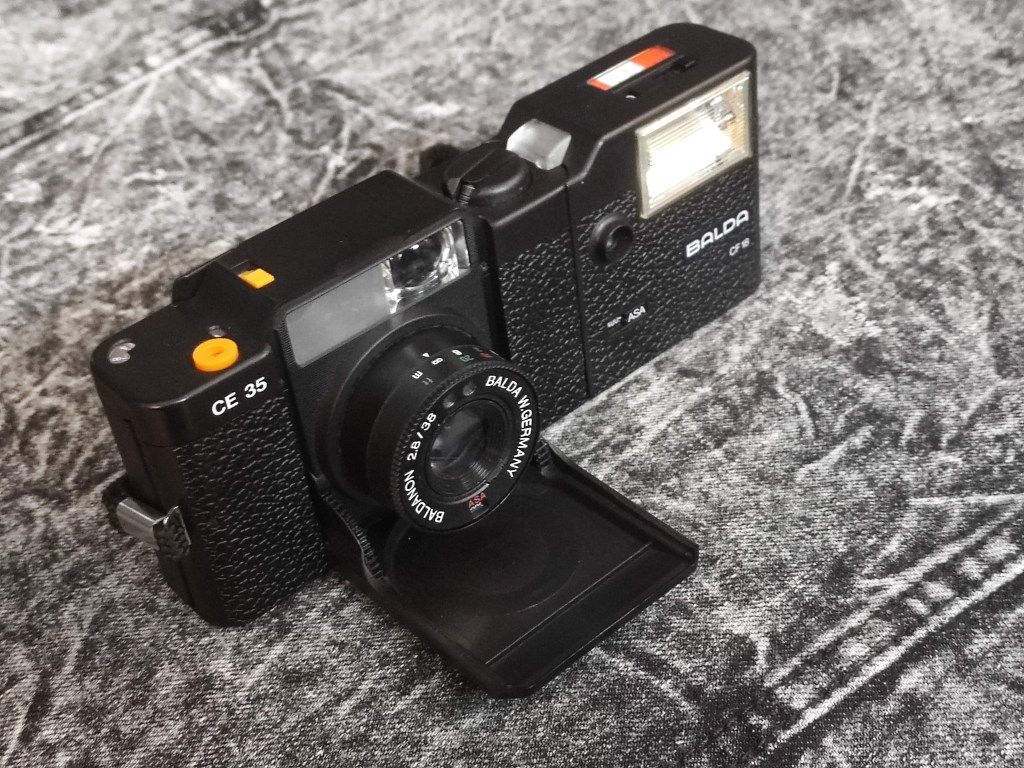
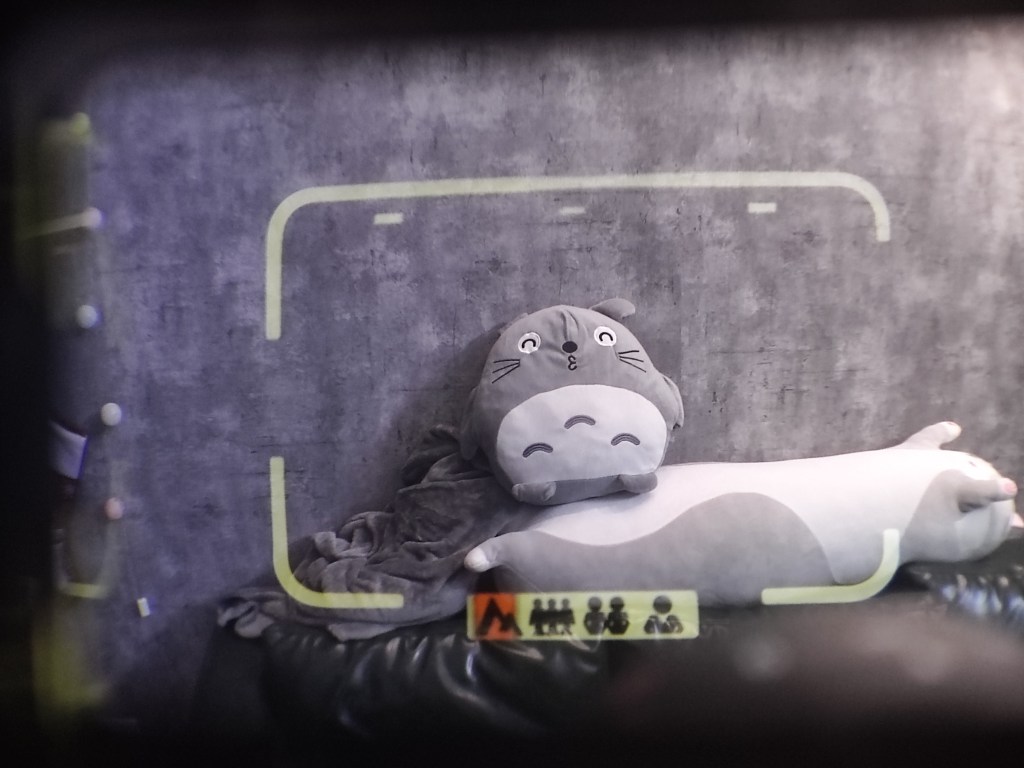
The Balda CE 35 is a 38mm F2.8 pocket camera with full auto exposure, great metering, and zone focus marks visible in the large bright viewfinder. The accompanied flash meters too and has both ISO settings and two options for subject distance.
I discovered the Balda CE 35 while searching for a replacement for the hard-to-find/often lost strap for my Voigtlander Vito C (the pocket camera from the 1980s – not the 1960s version). I really like pocketable full-frame cameras like the Minox 35 and Contax T. What I dislike about the Minox 35 series is the viewfinder is not that big or bright – and if you didn’t pay attention to what the focus is set to – you’ll miss the shot. But, it is one of the best pocket (or otherwise) cameras I’ve owned. After gifting it to a friend, I needed a replacement. I ended up with a beautiful (but beat up) Contax T – and while it has everything – even a rangefinder, it’s not that small – more like something you can fit in a jacket pocket. Also, it has a fragile plastic frame inside the titanium body which – if broken like on mine, can cause problems later. It’s also insanely expensive with older electronics.
So a local shop has this Vito C with flash – but no strap. I buy it and immediately love the bright viewfinder and excellent German design. It even has the same arrow to indicate if you need to cock the shutter/wind the film as the Voigtlander Bessa 6×9! But, without a strap and a smooth body (I live in SE Asia where it’s very humid and plastic things are slippery), I always felt a bit nervous that I might drop it. So began the online quest for the strap (which ingeniously can be added/removed by pressing a pen tip or needle into a small hole on the front). Eventually, I found the Balda version of the Vito C, and solved 2 problems at once. The Balda version had 2 great features and included the strap. It has a textured – more grippy body, sort of a faux leather textured embedded in the plastic body, and backlit exposure compensation! The one I found on an auction site also included the rare strap! But would it work? Would the lens be as good as the Vito C, Minox, or even the Contax T? Well, yes, yes, and no. The Contax T has one of my favorite lenses on any camera ever – and I regret selling mine. I digress.
So the Balda arrives and it’s mint. Yay for me. I paid less for it than the Minox 35 GT, and about the same as the Vito C which I eventually sold. And about ⅓ of what I paid for the Contax T!

Would an automatic-only exposure camera hit the spot? Yeah. It’s different as one needs to plan for the occasion with lower ISO film if you want the lens to open up a bit (100 or 200) but I mostly shoot quick street snapshots and so framing the composition and getting those candid moments are most important to me. And as a zone-focus camera with an f2.8 lens, I would rather the camera shoot in the range of f5.6-f11 and shutter speeds of 125-500. Ok, so here’s a fun fact – the camera has a crazy range of ISO settings including 800 and 1000! I do like Cenestill 800…
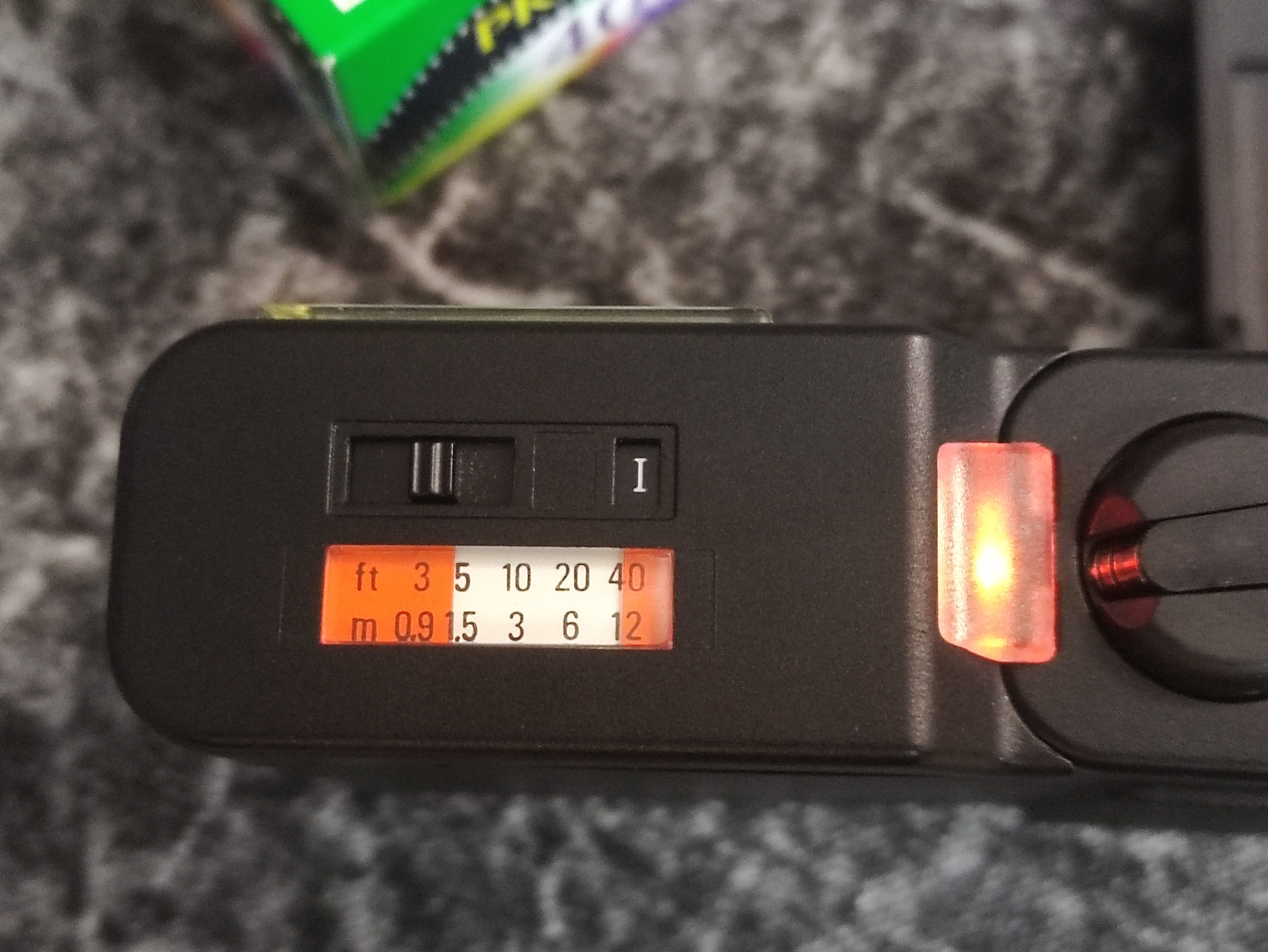
Occasionally I will try a shot in lower light with the 400-speed film set at a distance of a minimum of 3 feet/.9 meters. It works as well as expected and has an ok bokeh. But that’s not really what I would recommend this for – it’s not a portrait camera. It is a fast-to-use, lightweight, durable plastic camera that feels sturdier than the Minox – and is thankfully single-stroke with an easy-to-load back door – thus beating the Minox and Contax T for ease of film loading.
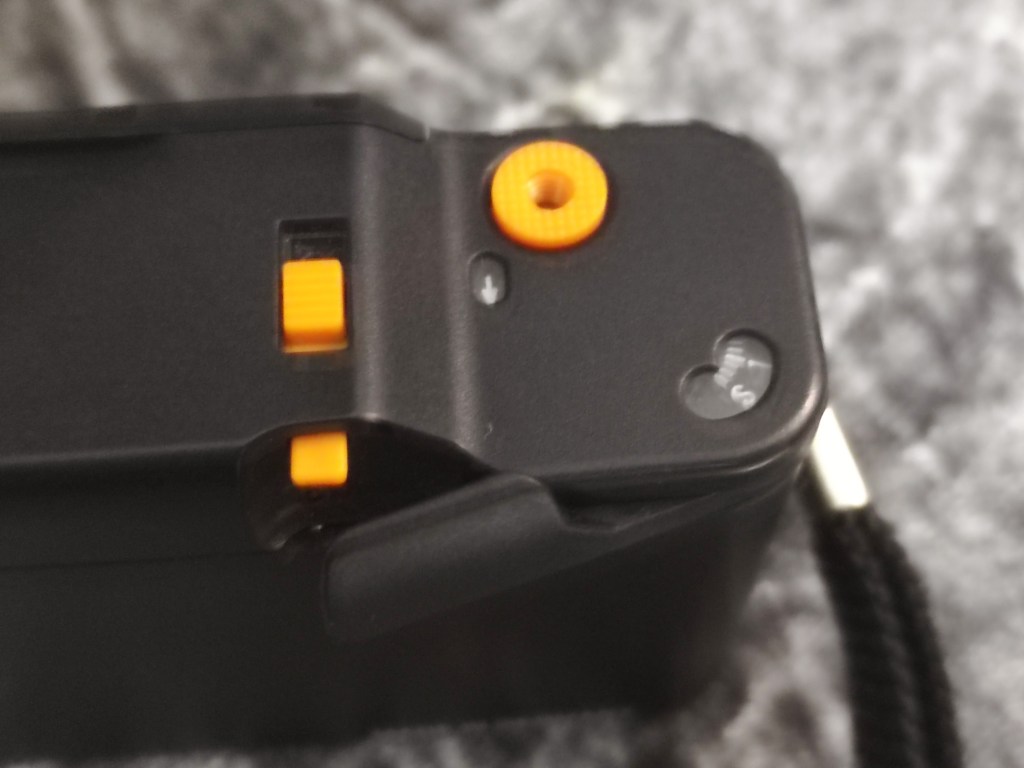
Another great feature is the winding lever can be left about 15 degrees from the body, ready to be pulled to grab the next snapshot. The flash attachment is very easy to use and has a fantastic orange light in a frosted window to indicate that the flash is ready to blast away. While I rarely use it, it’s good to have for indoor/nighttime occasions. I love just carrying it in my inside pocket and taking snapshots of random street scenes. The standard lens is just slightly wide at 38mm and seems to have great resolution. You be the judge.
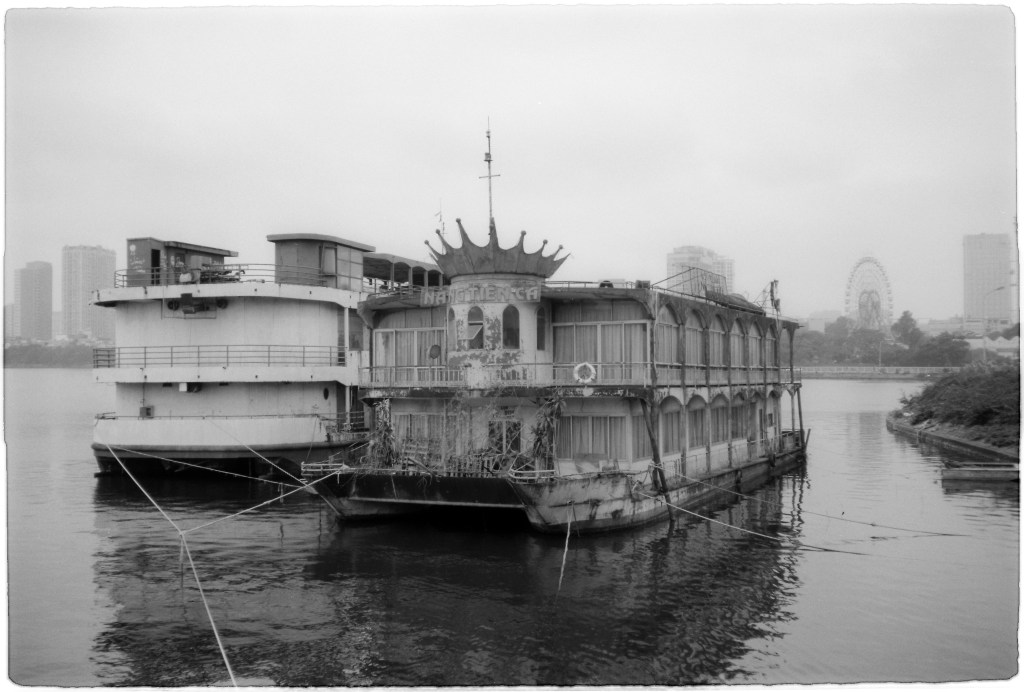
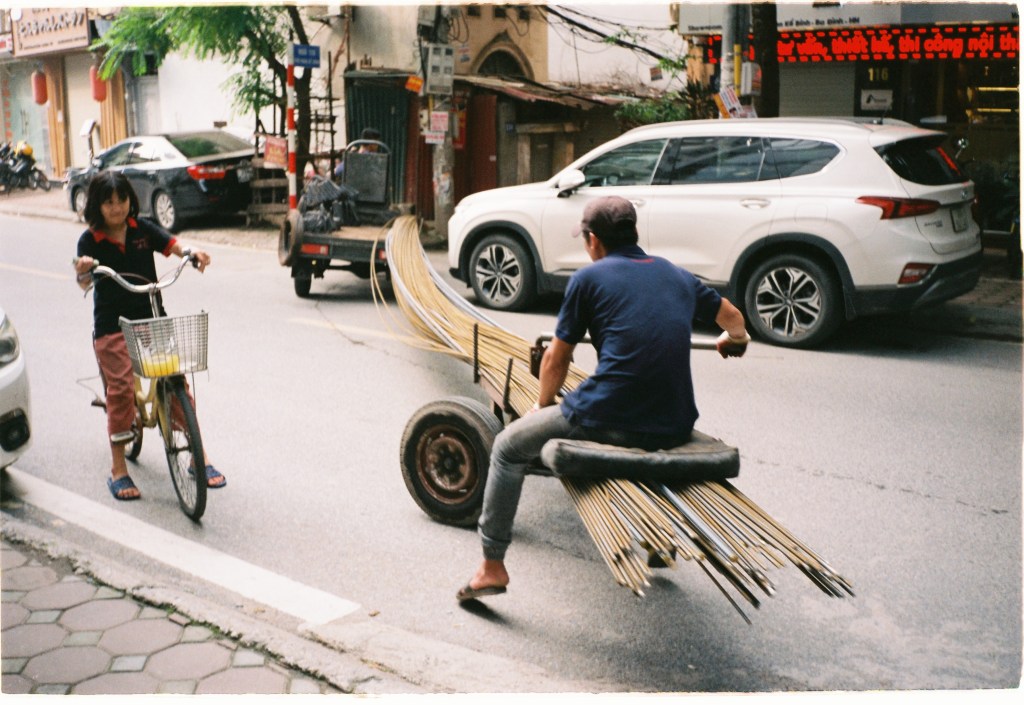
Here are some sample photos:


Let me know your thoughts about the Balda CE 35. The camera has many versions under Voigtlander, Balda, Revue, etc. If you decide to grab one I would highly recommend looking for the CS35 which includes a self-timer.
Cheers and thanks for reading.
-
Shooting expired Vision500t with the fantastic AGFA Optima 1035 sensor.

The above camera is a wonderful example of German engineering and features a sharp 40mm f2.8 lens, automatic exposure, flash aperture adjustment, a big red “sensor” shutter button, and keeps your exposed film safe from the dreaded “is there film in here…oooops” problem by spooling into an enclosed chamber. For a detailed review of the camera, check out this Analog Insights review. This single review sold me on the idea that I must own this semi-rare masterpiece of camera design.
I couldn’t have said it better. What I love about this camera is the huge, bright viewfinder with zone focus indicators. I learned zone focusing with the Minox 35 GT, but often forgot that I had changed to a close focus distance and wasted a shot when I got back to shooting street stuff at a distance. No problem here as the viewfinder clearly shows mountains, a couple people, or an individual. The only thing that would have made this possibly my favorite camera of all time is being an aperture priority rather than a program exposure camera.
So, with rising film prices, I opted for a cheap roll of expired Vision500t. This film is made for Tungsten lighting and has a blue cast – cool temperature for the colors. The fact that it was expired meant that it needed to be exposed at 250iso. I had to do some post-editing as the shadows were just to grey/low contrast. The camera/lens did well though! Sharp details and exposed accurately for the iso setting.
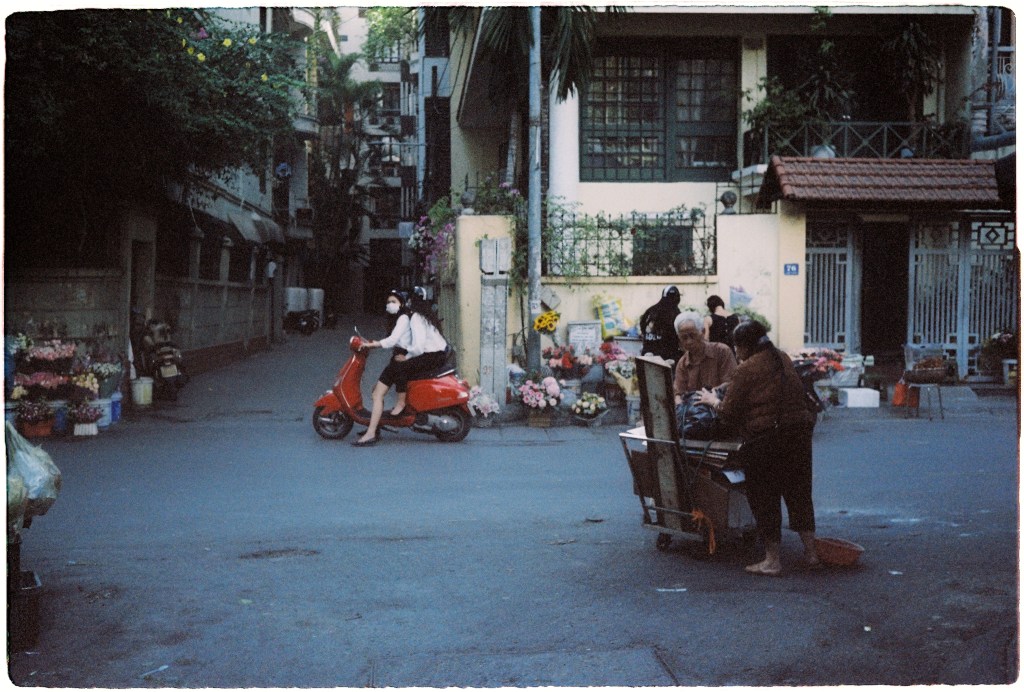
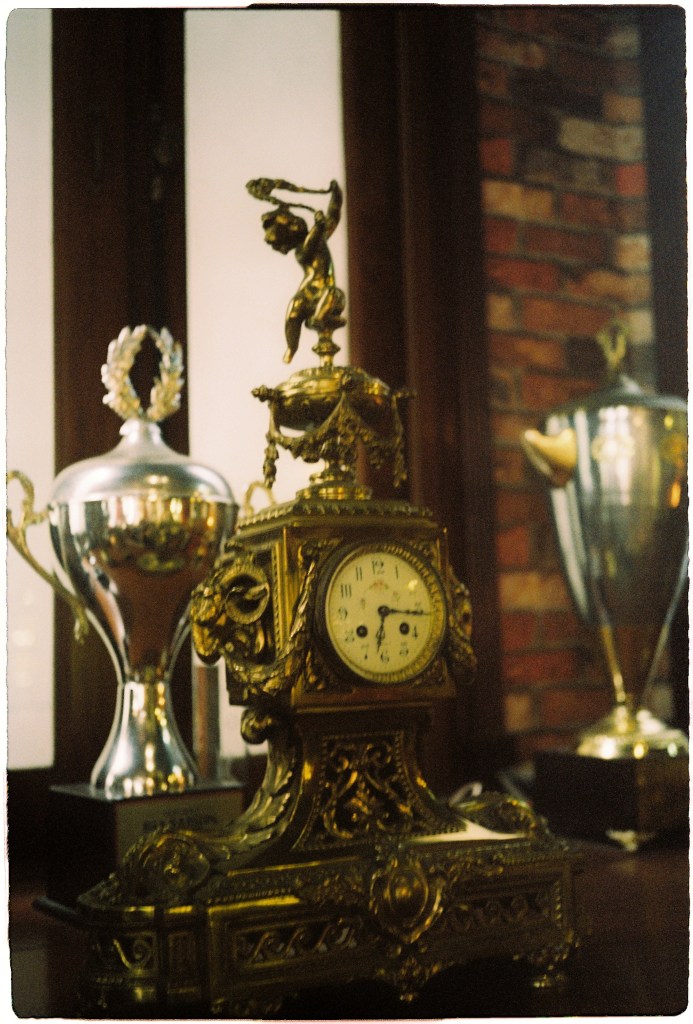
One drawback of zone focus is that it’s easier at a wide-open aperture, which this indoor shot clearly was (likely f.28), to miss focus. There is a rangefinder version of this camera but it’s much more expensive and as a street photographer, I rarely shoot close up and wide-open – so not worth the expense/effort. I’ve only seen a few on auction sites and the price is crazy.
Here’s a shot with some bokey that could have benefitted from some exposure compensation…
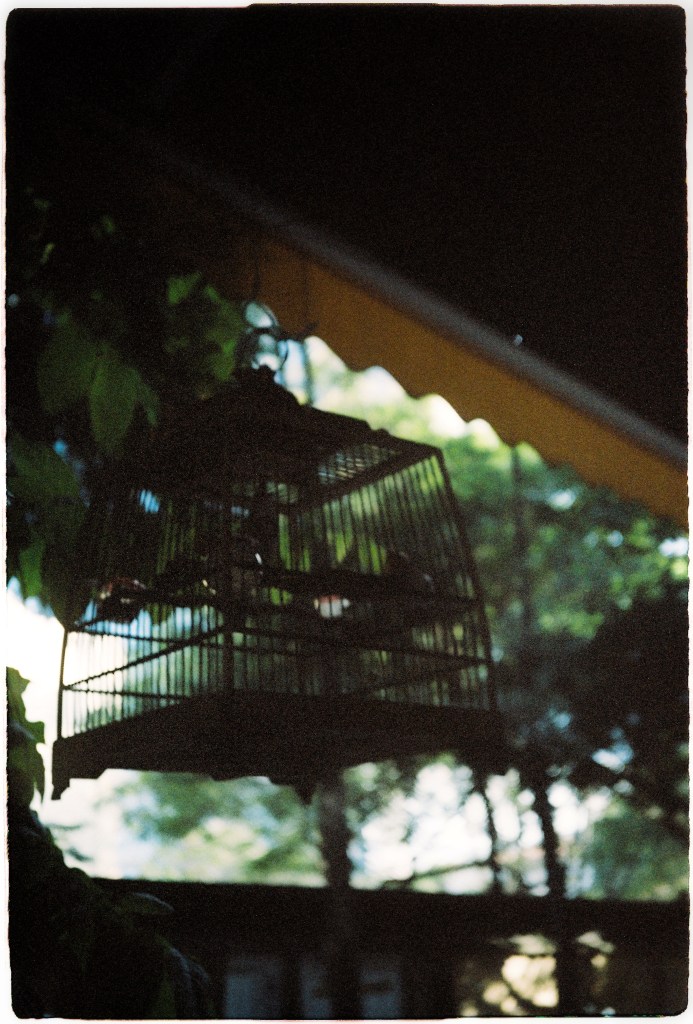
Next, we see a shot with deep shadows and a bright blue sky. How did the Optima fare with the mid-tones and balancing the two extremes? You be the judge…

That’s it for my review of this wonderful camera and film that… well, I got what I paid for. Let me know in the comments if you’ve used this camera, or have any tips, or questions about it.
Cheers,
Daniel
-
Hello World!
Welcome to WordPress! This is your first post. Edit or delete it to take the first step in your blogging journey.


 VijnBord
Leave a comment